
Engineering in Virtual Reality and Digital Game Design
The Virtual Reality Engineering and Video Game Design are fields in constant evolution that have gained great importance today.
These fields combine technology, creativity, programming and user experience to create immersive and exciting experiences.
Below we will explore the various options and educational institutions available for those interested in studying virtual reality and video game engineering.

Where to study Virtual Reality Engineering and Digital Game Design?
The 2023 educational offering on Virtual Reality
Computer Engineering in video games, virtual and augmented reality
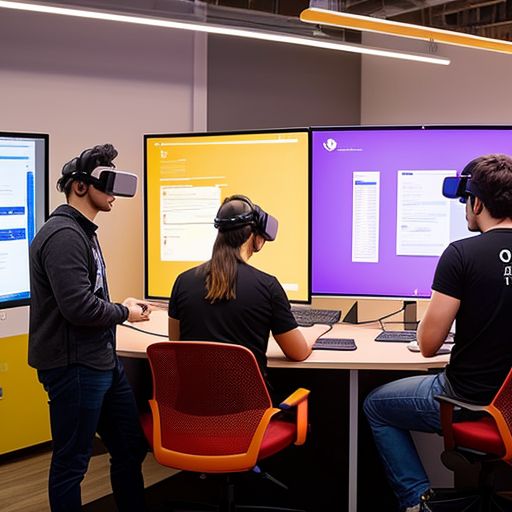
The own degree in Video Games, Virtual and Augmented Reality from the Universidad de Deusto is presented as an extension of the training in Computer Engineering, addressing the development of interactive digital experiences in areas such as video games, virtual reality, augmented reality and mixed reality. This educational offering responds to the growing demand in the video game and immersive environments sector, with a forecast of annual growth of close to 40-50% in the coming years.
This degree is designed for those interested in computer engineering and who wish to participate in the creation of interactive experiences in the aforementioned fields.
The training complements the profile of graduates in Computer Engineering, providing subjects focused on computer graphics, 2D/3D animation, virtual and interactive environments. In addition, skills are acquired in the development of interactive digital experiences, ranging from entertainment applications to engineering simulators, industrial training, tourism, culture and more, adapting to a variety of industries.
This own degree from the Universidad de Deusto offers the opportunity to expand the student's abilities and knowledge, allowing them to get involved in a constantly growing and diversifying market, where technological and creative disciplines come together to build immersive and engaging experiences.

Engineering in Technologies for Animation and Video Games
The Universidad CEU San Pablo offers the Bachelor's Degree in Engineering in Technologies for Animation and Video Games, designed to train competent professionals specialized in various key areas.
This academic program will equip you with the skills needed to handle essential graphic and digital tools for creating video games and interactive content. In addition, it will allow you to develop skills in design and 2D and 3D animation, the conceptualization of video games, the development of original visual projects and participation in highly complex projects.
A distinctive feature of the Degree is the possibility of choosing from three specializations: video game technologies, animation technologies or video game design, which will allow you to specialize according to your interests and aspirations.
The focus of the final year of the program is centered on practical application through real projects both in the university environment and in professional internships in companies. This experience involves creating a final degree project, participating in an interdisciplinary transmedia project and valuable work immersion in the industry.
Upon completing your training, you will have a solid portfolio that will include tangible projects and work experience with direct applications in the video game and animation industry.
Engineering in Video Game Development and Virtual Reality
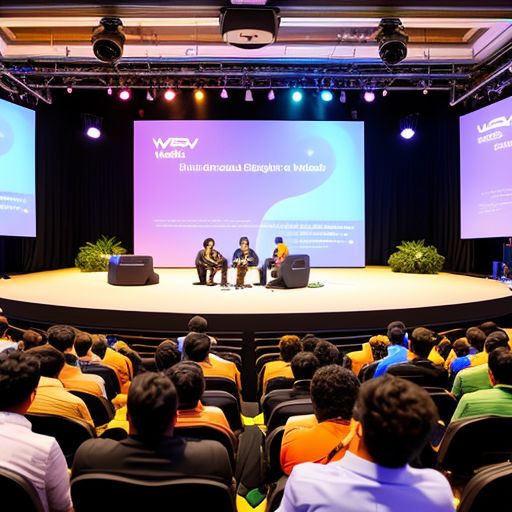
The Degree in Video Game Development and Virtual Reality Engineering, offered by the Universidad de Talca, is designed for students interested in strengthening their technological and creative skills in the field of virtual environments. With a multidisciplinary approach, the program trains students in video game creation, combining engineering, design and computing to address a wide range of applications, from recreation to education and simulation.
Graduates earn the titles of Bachelor's in Video Game Design and Development, and Engineer in Video Game Development and Virtual Reality.
The degree stands out for offering specializations and Video Game Optimization, as well as providing access to state-of-the-art facilities and a comprehensive library. It is also the first of its kind in Chile and offers exchange and collaboration opportunities with globally renowned universities.
Degree in Virtual Reality and Video Games (Engineering)
Offered by Universidad de Cuenca (Ecuador), this degree addresses the growing transformation of industries and communication towards "virtuality" and the "metaverse", where businesses, education and culture have adopted more dynamic and technological dynamics.
The main objective of the Degree in Virtual Reality and Video Games is to train engineers specialized in virtual reality and video games, equipped with ethical values and social responsibility.
The career profile of the degree covers a wide range of roles in the extended reality and video game industry. Graduates will be experts in designing and developing virtual and augmented reality spaces, as well as video game systems. They will also be trained to create interactive experiences and simulators in various fields such as education, medicine and industry.
Their training will enable them to be 2D and 3D animators, video game engine programmers, managers of projects and companies specialized in extended reality and video games, and independent workers with international reach.
The academic program grants the title of Engineer in Virtual Reality and Video Games to students who satisfactorily complete the curriculum. The study mode is in-person and is taught at the Matriz Cuenca of the institution.
The program is structured into 8 cycles, with a total of 40 subjects totaling 5,760 hours of training. For successful completion of the program, obtaining 120 academic credits is required.
The Degree in Virtual Reality and Video Games (Engineering), under the Academic Unit of Informática, Ciencias de la Computación e Innovación Tecnológica (ICCIT), has been approved through resolution RPC-SO-30-No.473-2022.

Alternatives to Engineering in Video Game Development and Virtual Reality
Technical Degree: Design and Development of Video Games and Augmented Reality
In Peru, Senati offers the degree in Design and Development of Video Games and Augmented Reality offers training in the design and creation of video games and virtual simulators using technologies such as Virtual Reality, Augmented Reality and Artificial Intelligence, with the purpose of developing applications for various platforms.
This degree lasts 6 semesters (3 years) and grants the title of Professional Technician in Design and Development of Video Games and Augmented Reality. The qualification also requires an English certification at the B1 level.
By studying this degree, you will acquire a series of key skills and competencies. You will be able to build software for different platforms, including data management and communication, implementing algorithms of various complexities. In addition, you will be able to create video games of different types and genres using advanced technologies, as well as design and develop virtual simulators oriented to areas such as recreation, education, training, industry, health and digital economy, making use of information technology tools.
Your skills will also include the integration of design principles, creative thinking and editing and modeling tools, aligned with engineering standards, to conceive and solve interactive systems and video games. You will be prepared to tackle projects with a systemic approach, solving specific problems and generating innovative proposals and ventures in your area of specialty.
This training will allow you to work technically and professionally in various areas, such as software development, programming of real-time interactive graphic applications, video game design, 2D and 3D animation, multimedia design, entertainment, marketing, sales and more.
The degree in Design and Development of Video Games and Augmented Reality at Senati offers tangible benefits, such as faculty with industry experience, cutting-edge equipment and software, a dual learning system in collaboration with companies, agreements with technology partners and a track record recognized by students, graduates and companies that support the quality of the training.
Diploma in Creating Interactive Virtual Reality Experiences
The Unab from Chile proposes the Diploma in Creating Interactive Virtual Reality Experiences emerges to establish a space for creation, design, reflection and experimentation with and for Virtual Reality. This program aims to allow participants to explore and practice from different perspectives, such as the history of the medium, video game design theory and interactivity, as well as addressing technical aspects related to interactive systems programming and production. In this way, participants will be able to conceive and develop Virtual Reality experiences in a creative and reflective, user-centered way.
The Diploma in Creating Interactive Virtual Reality Experiences consists of a series of workshops in which attendees will be able to delve into the possibilities and challenges of this medium through the design and development of projects. These workshops will be complemented by cross-cutting subjects that will provide both technical and theoretical elements, with the aim of fostering exploration and experimentation in the field of Virtual Reality.
The Diploma in Creating Interactive Virtual Reality Experiences is designed for students and graduates of disciplines related to the arts and design, such as Visual Arts, Graphic Design, Architecture, Audiovisual Production, Film, Digital Animation and 3D Modeling, among others. This program is aimed at those interested in exploring, designing and experimenting with Virtual Reality.
It is also open to professionals and enthusiasts without professional experience who wish to break into the creation of 3D digital environments, as long as they can demonstrate a previous track record in the field.

Creativity and Programming in Virtual Reality Engineering and Digital Game Design
Creativity is an essential element in virtual reality engineering and digital game design. Designers and developers create unique and exciting experiences for users. Programming is also a key element in these fields, as it allows developers to create games and interactive experiences.
Creativity and programming are closely related in virtual reality engineering and digital game design. Developers must be able to program their creative ideas so that they work in the virtual world. Some creative and programming projects in these fields include adventure games, flight simulators and interactive virtual reality experiences.
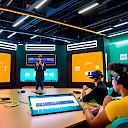
How programming relates to creativity in these fields
Programming and creativity intertwine in an essential way in virtual reality and digital game design. In virtual reality, programming makes it possible to transform creative concepts into immersive virtual experiences through natural interactions and stunning visual effects.
In game design, programming brings creative ideas to life by building game mechanics, narratives and challenges, while solving technical problems in an imaginative way. This collaboration between programming and creativity is what brings captivating virtual worlds and innovative games to life.
User Experience in Virtual Reality Engineering and Digital Game Design
User experience is a key element in virtual reality engineering and digital game design. Developers must be able to create immersive and exciting experiences for users. This involves designing the user interface, gameplay and narrative of the experience.
User experience is carefully designed in these fields to ensure that users feel immersed in the experience. Some virtual reality engineering and digital game design projects focused on user experience include role-playing games, action and adventure games and interactive virtual reality experiences.
The virtual reality engineering and game design combine technology, creativity, programming and user experience. In the future, technology is expected to continue evolving and new opportunities to emerge in these fields.
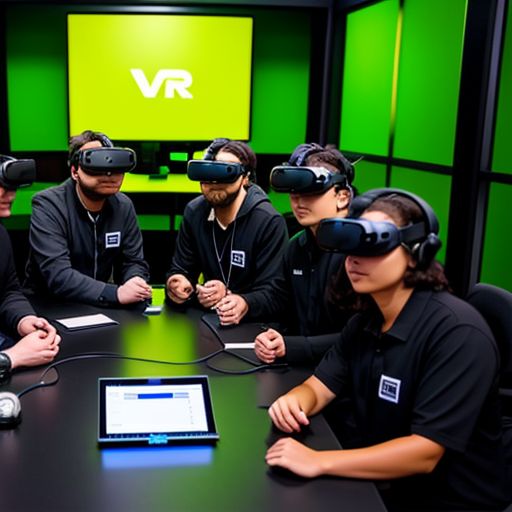
Future prospects for virtual reality engineering and digital game design
On the horizon of virtual reality engineering, a substantial improvement in visual quality is emerging, more intuitive interaction through gesture and eye tracking, as well as the expansion of social and collaborative virtual environments.
Digital game design will advance toward ultra-realistic graphics and meticulous details, powered by artificial intelligence to create more realistic and adaptive games, while open-world games will become even more interactive.
The integration of virtual and augmented reality will offer blended experiences and narratives will branch into more complex forms, allowing personalized narrative control for players.
Tips
For those interested in the field of virtual reality, it is essential to start by developing a solid understanding of technological fundamentals, such as display technology and motion tracking, and acquire practical skills in using development tools such as Unity or Unreal Engine. In addition, it is crucial to explore the intersection between user experience design and virtual reality, understanding how to create intuitive and immersive interactions.
For those interested in digital game design, acquiring a solid foundation in the fundamental principles of game design is essential. This includes understanding game mechanics, narrative and how to create a balanced and engaging gameplay experience. Developing basic programming skills will allow for better communication with development teams and a deeper understanding of how games are built.
Additionally, creating a diverse and well-designed portfolio that showcases your skills and previous projects is crucial to entering the industry. Participating in collaborative projects, playing a variety of games and critically analyzing their elements will also help cultivate a deeper understanding of what makes a game successful.
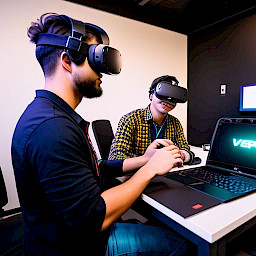
The importance of user experience in Virtual Reality engineering and digital game design
User experience (UX) plays a fundamental role in virtual reality (VR) engineering and digital game design, as it determines how users interact with, perceive and enjoy applications and games.
Virtual Reality Engineering:
In Augmented, mixed or virtual Reality, user experience is essential to create immersive and engaging environments. Good UX in VR ensures that users feel comfortable and connected with the virtual environment, minimizing the possibility of dizziness and discomfort.
The design of intuitive and natural interactions, the effective use of three-dimensional space and the real-time response to user actions are crucial aspects of UX in VR.
A poor user experience creates a "pain point" and can result in a disconnection between the user and the virtual environment, decreasing immersion and the desired emotional impact.
Digital Game Design:
In digital game design, user experience is essential to ensure that players enjoy and engage with the game effectively.
Good UX in digital games covers aspects such as proper difficulty balance, intuitive game mechanics, a coherent and engaging narrative, as well as clean and functional user interfaces.
Game designers analyze how players interact with the game, how they feel as they progress through it and how they connect emotionally with the characters and the story. A well-designed user experience increases player retention, satisfaction and the commercial success of the game.
In both fields, user experience directly impacts user satisfaction and engagement. In interactive experiences a user-centered design can make the difference between an app or game that captivates and excites users, and one that is confusing or frustrating.
Considering UX from the early stages of development and conducting continuous testing with real users will help identify problems and opportunities for improvement, ensuring that virtual reality and digital game experiences are attractive, intuitive and rewarding for users.
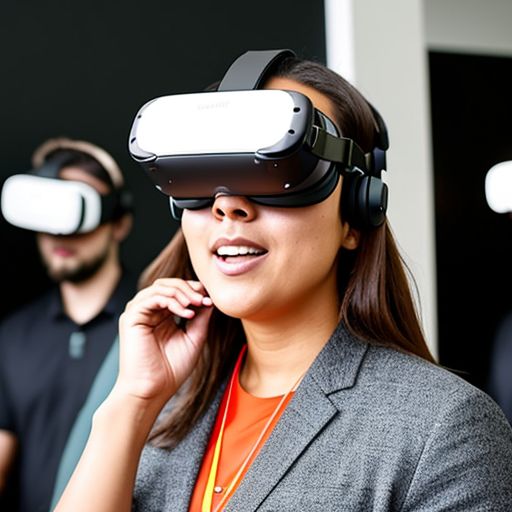
Career field
The job field in augmented, virtual and mixed reality offers exciting opportunities for professionals who can work on creating immersive experiences for entertainment, education, medicine, aeronautics, chemistry and more, involving roles such as software engineers, interaction designers and 3D artists.
In digital game design, doors open for game developers, level designers, concept artists and programmers, collaborating on creating games for various platforms and genres.
Both fields require a balance between technical skills and creativity, with job opportunities in development companies, independent studios, startups and sectors related to technology and entertainment.
Career test
Taking our career test can be useful to determine if virtual reality and digital game design fit your interests and skills. Answer honestly and analyze the results to get an idea of your affinity with these areas. Research more about the industries, talk to professionals and consider getting involved in related projects to make an informed decision about your professional future.