
Argentine polo, a high-value industry with international projection
Genetics, breeding, technology, business and specialized knowledge in one of the activities where Argentina has worldwide recognition.

A look at the industry and the knowledge that makes its development possible.
Argentina holds a prominent place in international polo thanks to its players, breeders and specialized professionals. Around this sport there is an industry of genetics, reproduction, veterinary medicine, training, exports and services that connects high-value economic activities with different educational paths.
A polo horse brings together much more than physical condition: its lineage, temperament, health, preparation and athletic ability are the result of years of selection and work. That combination explains why a breeding establishment may need both a specialized veterinarian and an administrator, a field technician or an international trade professional.
Breeding and genetics where value begins
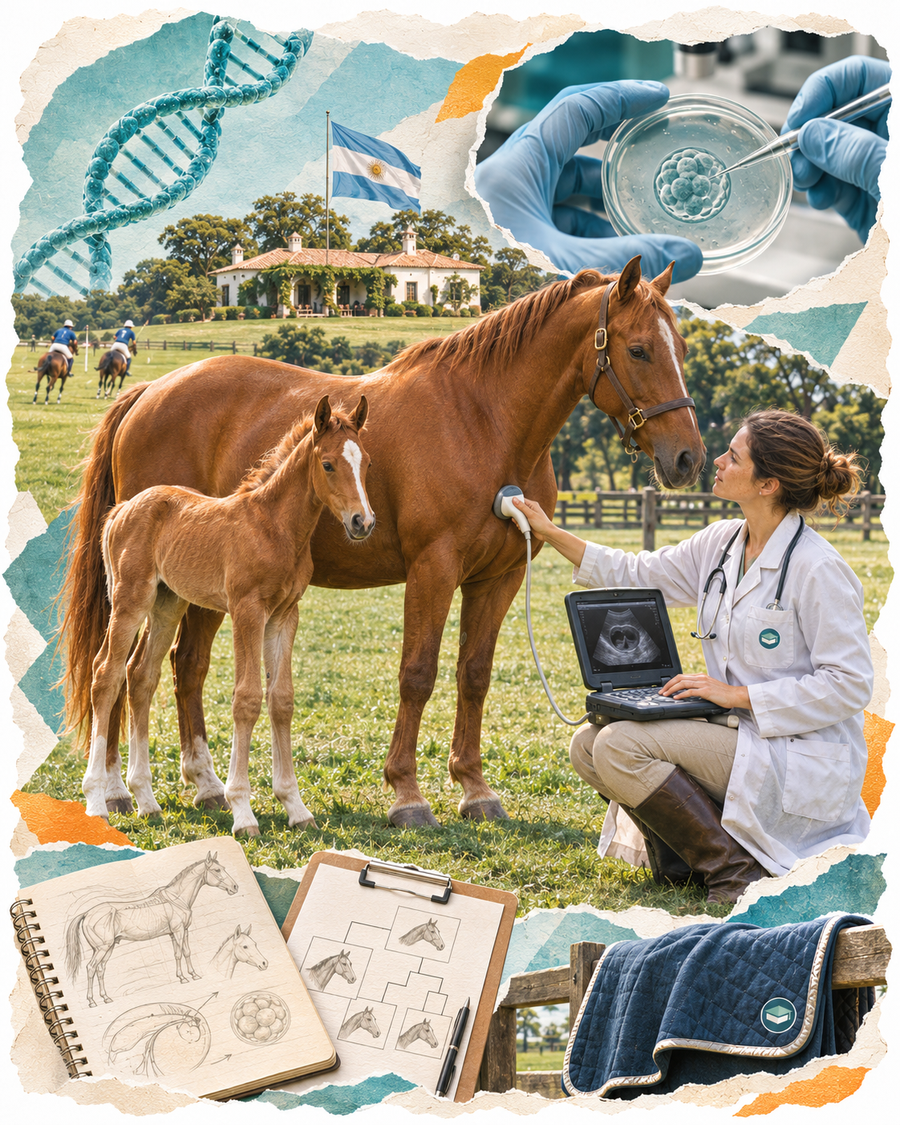
The selection of sport horses combines livestock tradition with applied science. Breeders evaluate genealogies, animal characteristics and offspring performance to guide breeding programs. Agility, acceleration, balance and temperament are decisive qualities, but they develop together with handling, feeding and training.
A concrete reference is La Dolfina Polo Genetics , which describes its equine reproduction activities and technologies such as embryo transfer. Its work helps to understand how a genetic line can become a productive asset and why professionals are needed to evaluate and carry out reproductive procedures, document results and monitor animal health.
The educational link is direct: the Veterinary degree provides foundations in anatomy, physiology, reproduction and animal clinical practice. The Facultad de Ciencias Veterinarias de la Universidad Nacional de La Plata includes in its programs Biotechnology of Reproduction, Equine Clinic and Equine Diseases. In Tandil, the Universidad Nacional del Centro de la Provincia de Buenos Aires offers Veterinary Medicine with content on reproduction, genetic improvement and equine production.
For those more interested in laboratory work and research, the Universidad Nacional de Quilmes offers a Bachelor's degree and a University Technical degree in Biotechnology. They are broad programs whose scientific tools can be applied to different areas of animal reproduction and genetics.
Path example: a person studies Veterinary Medicine, focuses on large-animal reproduction and builds experience in specialized centers that work with donor and recipient mares and reproductive monitoring.

Training, equine medicine and specialized trades
After breeding begins a stage of breaking, adaptation and progressive training. Facilities may prepare their own horses or receive animals from third parties to develop their sporting abilities. Training the animal requires knowledge of equine behavior, fieldwork, workload management, suitable facilities and welfare criteria.
Daily work also depends on personnel trained in specific trades. The Asociación Argentina de Criadores de Caballos de Polo carries out actions related to breeding and training in the sector. Its activities make it possible to identify the role of petiseros, handling managers and staff who know the daily needs of horses.
Sports medicine occupies another stage of the chain: a veterinarian can perform health checks, evaluate locomotion problems, order studies and support recovery processes. An example of university education outside Buenos Aires is the Universidad Nacional de Río Cuarto , whose degree includes clinical training, genetics, reproduction and animal production.
A graduate can build a path from general clinical practice toward equines, diagnosis or rehabilitation; whoever chooses technical training can focus on handling, feeding and daily care of the animals. Both profiles take part in the same production process from different responsibilities.
Horse exports and international trade
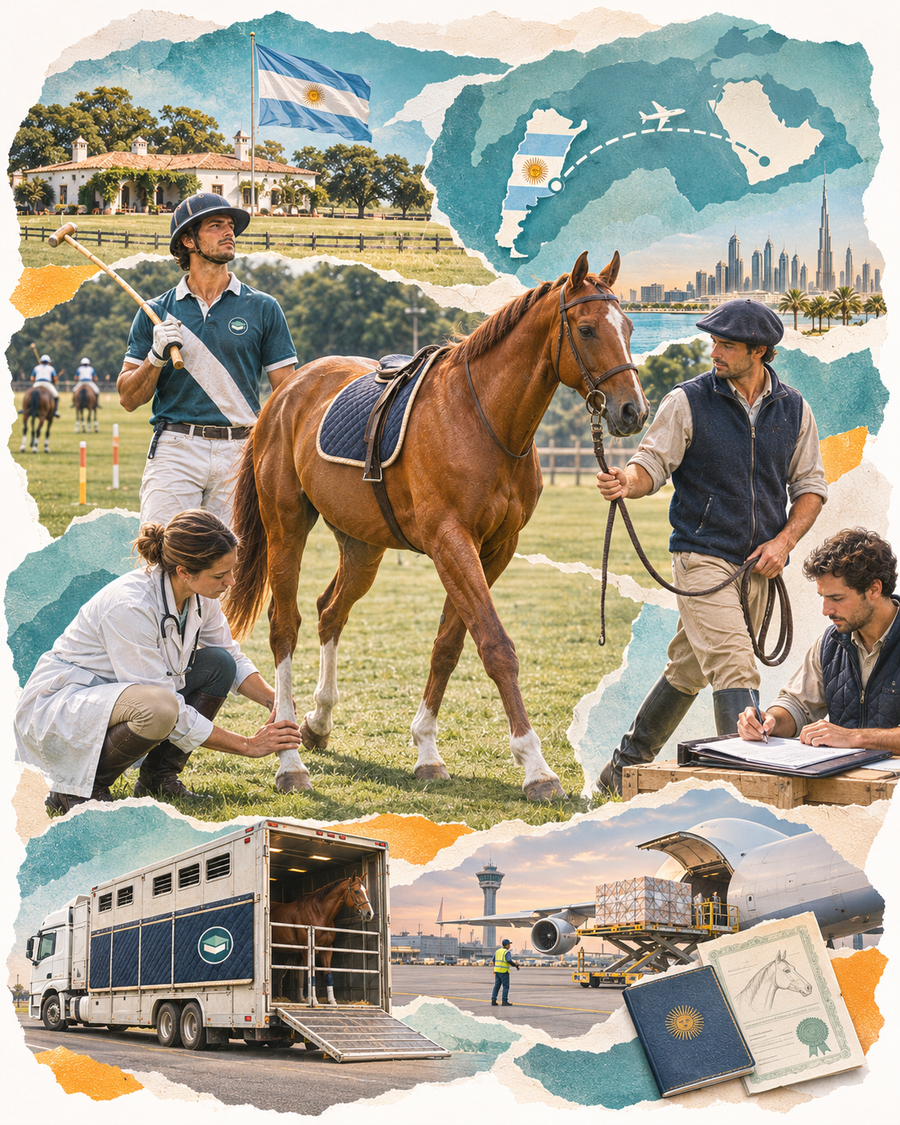
Argentine horses reach markets that demand animals for competitions, clubs and equestrian activities. An export involves sellers, buyers, veterinarians, transport agents, handling staff and specialists in health requirements and commercial documentation.
In February 2023, SENASA documented the certification of four polo horses from Lonquimay, La Pampa, bound for the United Arab Emirates . The case shows a concrete operation and helps explain why equine trade depends as much on the quality of the animals as on health compliance. The official publication does not identify an exporting company; therefore that shipment should not be attributed to a specific firm.
An operation of this type requires checking destination requirements, coordinating certificates and organizing transportation. The SENASA export portal is an institutional reference for understanding the health procedures.
Working in these tasks combines knowledge of logistics, customs, negotiation, languages and administration. The training in International Business allows you to explore that commercial dimension. As a concrete educational option, the Universidad Nacional de Luján offers a Licenciatura in International Trade with an intermediate qualification of Técnico Universitario in Foreign Trade and Customs.
Professional example: a foreign trade specialist who works with breeders can prepare commercial documentation, coordinate logistics operators and verify together with the veterinary team the conditions required by the buying country. They do not need to personally raise horses to be part of the business.
Tourism, equipment and high-value services
The industry includes clubs, schools, tourist experiences and artisan businesses. Puesto Viejo Estancia & Polo Club , in Cañuelas, is an example of how a sports facility can combine equestrian activity, member services and hospitality. Management requires organizing activities, customer service, maintenance, marketing and supplier coordination.
This type of experience is related to the degree in Tourism , as well as hospitality, marketing and event organization. A professional can design a visit that combines an introduction to polo, supervised activities and food services, coordinating equestrian staff and tourism providers.
The equipment manufacturing creates another universe of specialization. Casa Fagliano , with a tradition in Hurlingham since 1892, illustrates the connection between leather crafts, design, garment making and a specialized clientele linked to polo. In this segment, artisanal training, product design, brand management and e-commerce are combined.
The management of these companies also requires training. The degree in Business Administration provides an understanding of budgets, operations, purchasing, services and business development; these are skills applicable to a club as well as a stud farm or an equipment brand.
Technology and more training options for the equine industry
Modern establishments handle genetic records, health records, reproductive data and training follow-up. Organizing that information requires digital tools, traceability and the ability to interpret data. A person trained in computing can develop systems to record genealogies or program veterinary alerts; an agricultural professional can use that information to plan feeding and management.
To study the productive foundations, the Ingeniería Agronómica of the Universidad Nacional de Luján works with agricultural production processes and practices in its experimental field. Those who prefer computing tools can explore the Informática, Bioinformática and Programming offering of the Universidad Nacional de Quilmes , applicable to data analysis and information management problems.
The offering is broad because the industry needs different capabilities: genetic research, clinical practice, technical management, administration, tourism, design and logistics. Choosing a program can start from a concrete task in the sector. Those who want to work in reproduction will look for clinical and biotechnology subjects; those who prefer commercial management can focus on international business; those interested in the countryside can deepen their knowledge in animal production and rural administration.
An example of integration: a facility records genealogy and reproductive results with veterinary staff, organizes feeding and pastures with agronomic support and uses an information system to connect that data with its breeding decisions. Each type of training contributes part of the process.
An industry sustained by specialized knowledge
The Argentine polo brings together animal production, science, trade and services that support one another. Understanding its activities makes it possible to discover training options that are not always visible when only looking at the sporting competition.