
Degrees related to creativity
Degrees related to creativity
Design, architecture, film, music, writing y gastronomy are areas where you can develop your creativity. They share the search for ideas, but their tasks, tools, and work environments are different. Designing a chair involves solving different problems than writing a script.
To choose, ask yourself what you want to create and for whom. How you handle practice, revisions, deadlines, and teamwork also matters. Understanding the process helps you decide.
Creativity and artificial intelligence
In these fields, AI tools can be useful for trying out compositions, organizing ideas, or preparing drafts. Their usefulness depends on the assignment: a visual proposal needs style adjustments, a script requires coherence, and a product must work beyond the screen.
Learn to review what they generate and to explain your decisions. Before incorporating them into a project, check for errors, terms of use, and matches with existing works. Defining the problem, understanding the target audience, and evaluating the result remain essential parts of creative work.
Ten paths to explore
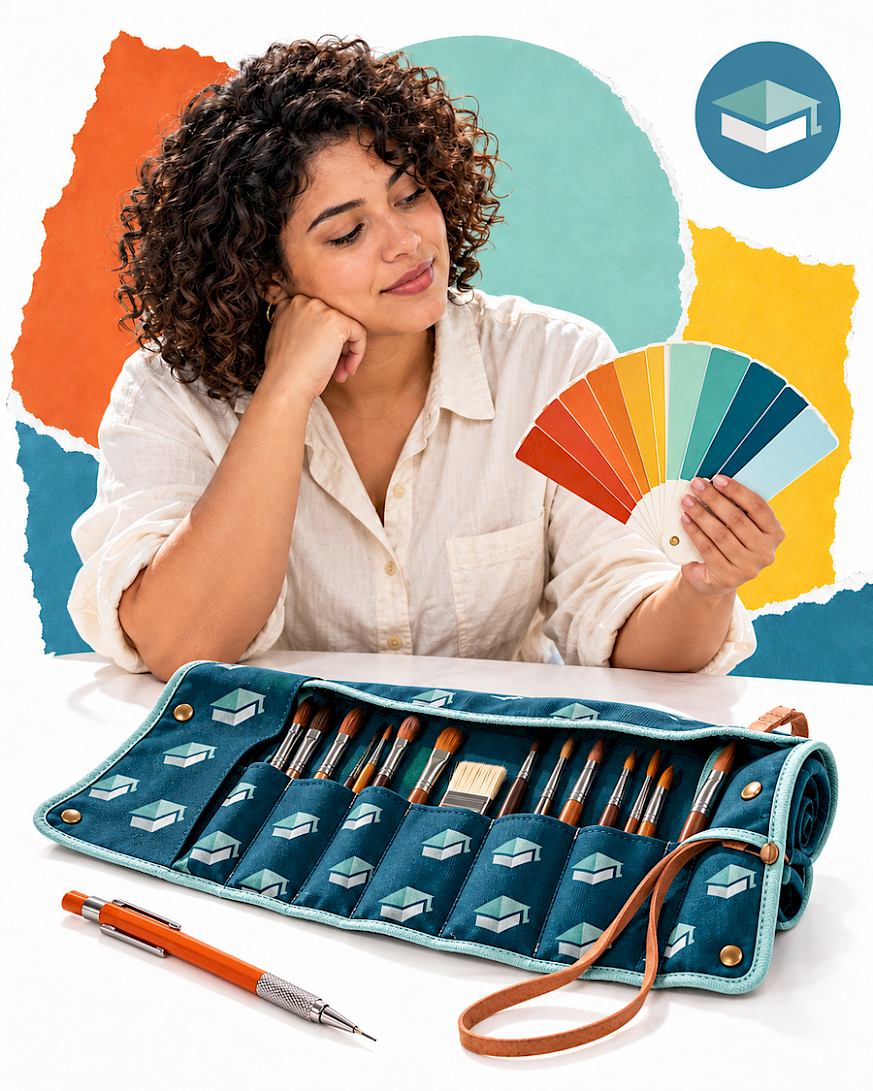
Graphic design and illustration
Graphic Design organizes images, colors, and typography to communicate. Book illustration is a professional activity that creates images to accompany stories. They share resources, but have different goals. In studios, publishing houses, and independent projects, you need to interpret assignments, justify decisions, and prepare files correctly.
For example, designing the visual identity of a publishing house and drawing the characters of a story are different assignments.
Industrial design
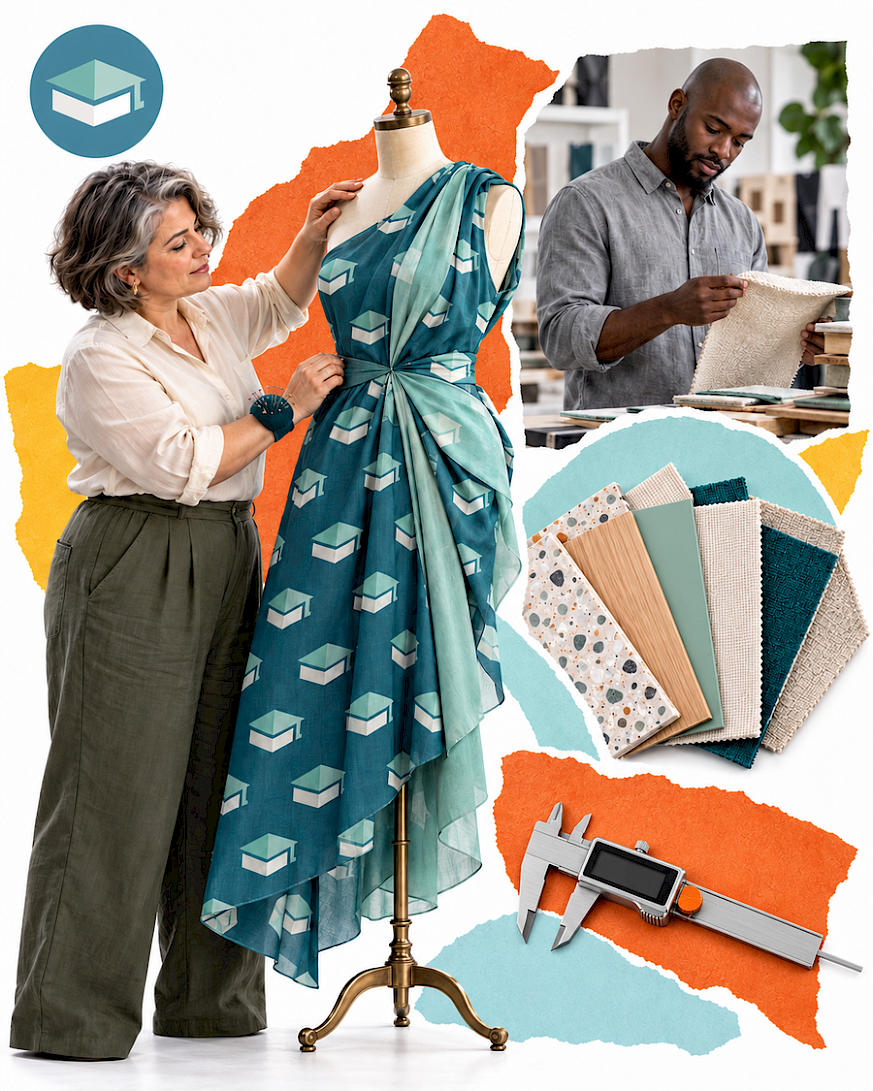
The Industrial Design focuses on physical products, from furniture to utensils. It combines form, use, materials and manufacturing. Training includes projects, representation and prototypes. A caliper lets you check measurements. The work can connect you with manufacturers, workshops and technical teams that test and refine solutions.
For example, developing a stackable chair involves testing its comfort, strength and ease of manufacturing before producing it.
A training example is the FADU-UBA Industrial Design plan, which brings together design workshops, technology and ergonomics.
Architecture and interior design
Architecture deals with buildings and spaces; Interior Design focuses on the use and fitting-out of indoor environments. Skills depend on training and the country. Choosing materials with a sample book requires considering maintenance and use. Both fields combine project work, coordination and site visits.
For example, designing a library and resolving its lighting, circulation and furniture require complementary interventions.
Fashion and apparel design
Apparel Design transforms ideas into garments and accessories through materials, pattern making, garment construction and collection development. The mannequin lets you observe volumes and fit. In brands, workshops and wardrobe, creativity coexists with sizes, costs and production times.
For example, creating a collection of jackets requires choosing fabrics, testing fits and adjusting the models for different bodies.

Film, photography and animation
Photography works with light, framing and capture; Cinematography adds editing, sound and shoot coordination; Animation creates movement through different techniques. A clapperboard or a camera strap point to jobs that also include planning, file organization and review.
For example, a story about a neighborhood can become a photographic series, a documentary short film or an animated sequence.
To see how these tasks connect, the ENERC Filmmaking program includes training in scriptwriting, photography, editing and sound.

Music, sound and performing arts
Explore Music, Music Production and Acting: performing, producing and acting are different activities. The metronome accompanies musical practice; the pop filter is used to record vocals. Studios and stages require listening, discipline and collaboration. Schedules may include nights and weekends.
For example, a play brings together character performance, music and sound work, with different responsibilities.
Advertising, writing and editing
Advertising develops messages for communication goals. Literature lets you delve deeper into language and literature; Editorial Design deals with the visual presentation of publications. Writing, proofreading texts and designing pages are different tasks that can come together in an editorial team.
For example, a magazine brings together articles, text revision and page design; a campaign needs messages adapted to its audiences and channels.
Visual arts
You can explore Fine Arts to learn about training connected with painting, drawing and other visual languages. The training combines techniques, history, analysis and practice. A set of paintbrushes represents just one part of the process: there is also testing, selection of materials and decisions about exhibition.
For example, developing a series of paintings about urban life involves choosing an approach and building a coherent proposal.
Ceramics and artisanal creation
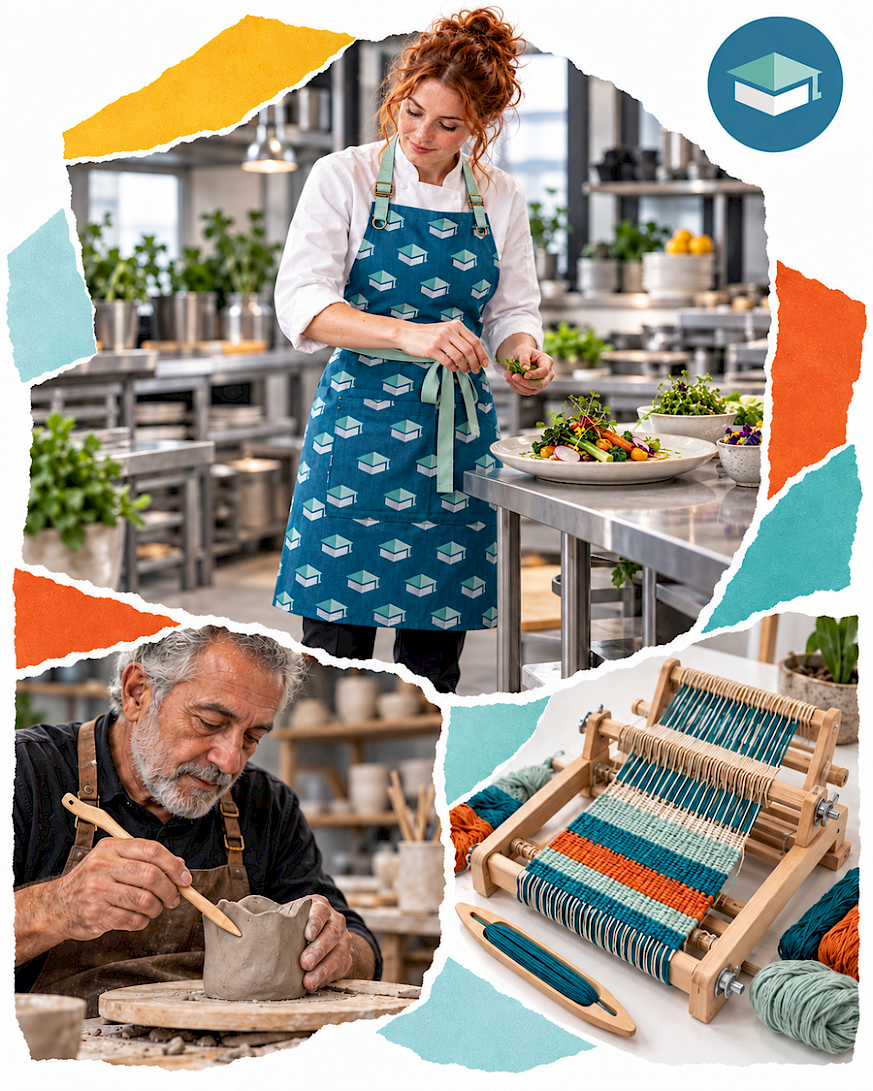
Ceramics and textile practices let you create with manual materials and processes. You can explore Fine Arts as an artistic path and look for specific training in ceramics or weaving. The modeling tool and the loom represent different practices. Workshop work requires knowing materials, timing and safety; selling pieces also involves calculating costs.
For example, modeling a series of vases or weaving a tapestry requires trying out shapes, textures and techniques before the final result.

Gastronomy
In Gastronomy, creativity shows up in recipes, combinations and plating. It is learned together with cooking techniques, organization and food hygiene. The apron goes with physical, coordinated work in restaurants, catering or your own projects. Get to know the pace of a kitchen before choosing.
For example, creating a seasonal menu requires tasting flavors, calculating portions, and maintaining quality during service.
How to choose between creative degrees
Start with a list of concrete activities: telling stories, working with materials, performing, designing spaces, or solving use problems. Then choose two or three paths to research.
- Read the study plans and highlight subjects that excite you and others that would be difficult for you.
- Compare duration, degree recognition, format, internships, and admission requirements on the official pages.
- Calculate costs for materials, equipment, software, transportation, and class time.
- Talk to students and professionals about a typical work week.
- Do a small trial: a photo series, a simple object, or a short scene, and ask for feedback.
Notice whether you also enjoy revising and repeating. That experience provides more information than just imagining the finished work. You can expand your exploration of degrees.
Education and everyday work
There are university degrees, technical programs, and specialized training. A course can help you test an interest, but it does not automatically equal a degree nor qualify you for every activity. Check the professional requirements of the place where you want to work.
Build a portfolio that shows the problem, the tests, the decisions, and your involvement. Practice digital tools without neglecting technique, communication, and organization. In freelance work you will also have to define scopes, budgets, and revisions. Income depends on the market, experience, and steady assignments; none of these areas guarantees employment.
Questions that help you decide
Do I need to draw very well? It depends on the path. Drawing is central to some practices; in others, writing, listening, movement, or technical problem-solving matter more.
Can I turn a hobby into a career? You can explore it, but test how you feel working with requests, deadlines, and other people's revisions.
Can you work remotely? Some digital tasks allow it. Film shoots, rehearsals, workshops, construction sites, and kitchens require in-person presence at different stages.
Choose your next learning experience, not a final identity. Comparing options and producing something of your own will help you understand what kind of creativity you want to develop. A career test can support that exploration and open up new questions.