
I want to study, but I don't know what I'm good at. How can I find out?
If you want to study and find it hard to recognize your skills, start by remembering something you helped make happen. When you taught your grandmother how to make a video call, for example, you may have drawn the buttons or found another explanation when you saw where she was getting lost.
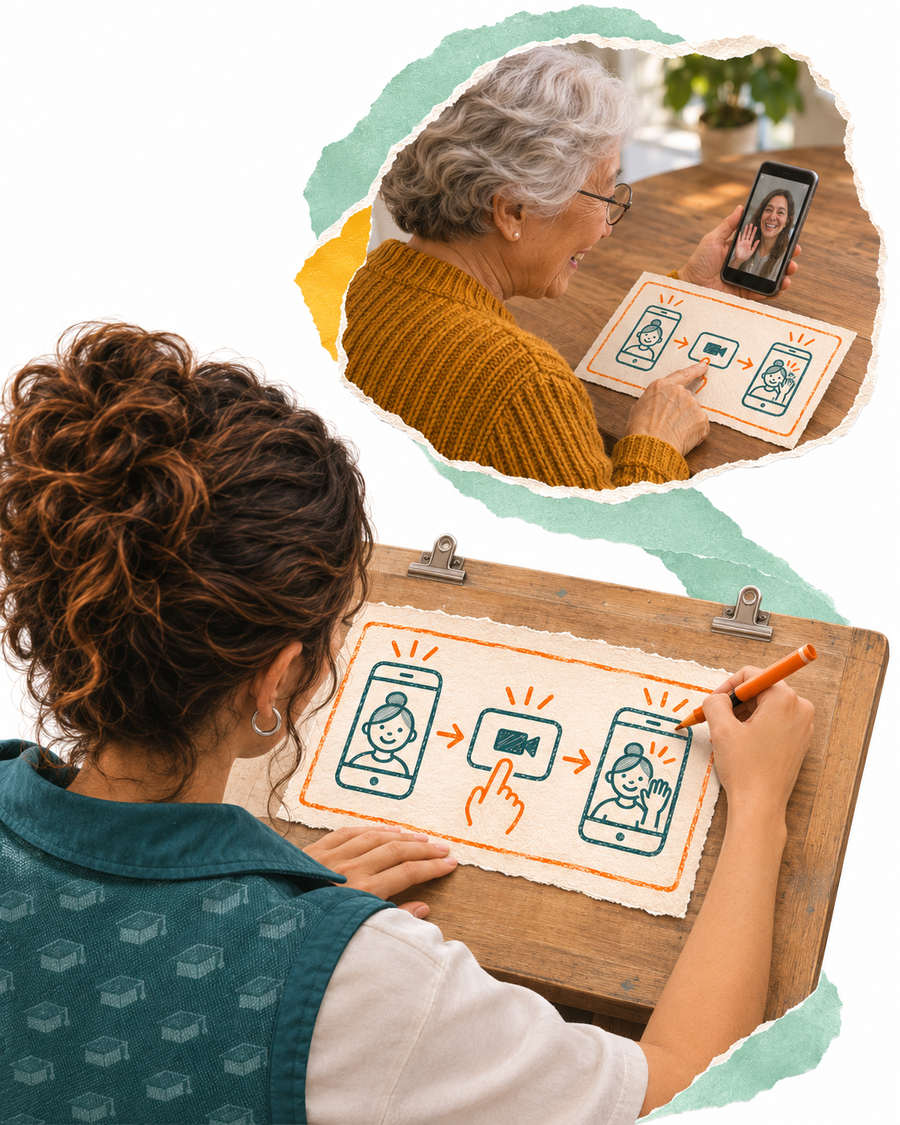
What do people usually ask me for help with?
Think of three recent times when someone turned to you. They can be small things, from school, from home, from a game, or from a job. You just need to remember what happened. For each time, complete this sentence: «Someone needed ___, I did ___ and in the end ___».
- «My group had five ideas for a project and one afternoon to do it. I calculated how long each idea would take and we were able to choose one».
- «My brother kept getting lost when changing buses. I drew the route and marked a building he could recognize from the window. The next time he made it on his own».
- «A friend had to send a file and kept getting an error. I tried another document, discovered that the first one was too large and managed to send it».
If right now you cannot remember anyone asking you for help, think of something you learned or solved on your own. You can also ask someone you trust: «Do you remember a time I helped you? What exactly did I do?». A specific memory will give you more material than praise like «you are so smart».
How to recognize a skill in something I have already done
Go back to your sentences and underline the verbs. In the examples you will find calculate, draw a route and test a possible cause. You already have words to describe skills like estimating time, representing information visually, or investigating a problem. Keep the example together with each skill. «I can estimate how long a task takes» is easier to verify and explain than «I am organized».
Now add two questions to each memory: what part did I enjoy? Which one would I rather have someone else do? Maybe you organize group projects well and end up exhausted from reminding others what is missing. Or you drew that map at your brother's request and then drew it again just for fun. If you are also wondering «what are my interests?», that detail deserves attention. There are things you have learned to do out of necessity and others you return to on your own initiative.
If you already recognize a skill and want to put names to your options, the guide on what to study based on my skills (opens in another tab) can help you look for other activities where you can use it.
From explaining a task to exploring three careers
Let's go back to the video call. If what you enjoyed most was figuring out at which step your grandmother got lost, you could explore teaching. Imagine that someone else understands the buttons right away, but gets confused when choosing the contact. Would you enjoy asking them questions and looking for another way to teach the same thing? If you're curious about that teaching moment, you can explore what a teacher does (opens in another tab).
If after the call you kept polishing the instructions so she could use them without you, there's another career that might interest you: technical writing. One task in this trade is writing guides that let people use a product. A good test would be to give your instructions to someone who has never used the app and watch at which step they hesitate. In the United States, the technical writing profile from the Bureau of Labor Statistics (opens in another tab) includes preparing instruction manuals among the tasks of this career.
And if what interested you most was drawing where to tap the screen, you could explore illustration. The official supplement to the Illustration qualification in Spain (opens in another tab) describes the work of creating images that express ideas. Think about your drawing of the buttons. Would you like to show how to make the call with just a few arrows and barely two or three words?
What activity can I try to find out if I like it too?
Choose something you already know how to do: prepare a recipe, use a phone feature, or teach the rules of a game. Explain it to someone and ask them to try it. Then prepare a version they can use on their own, either a short note or a sequence of drawings. Notice what questions they ask you and what you feel like improving.
When you finish, write a single sentence: “What I enjoyed most was ___ and I know it because ___”. An answer could be: “I liked drawing the steps. When I saw that my friend was mixing up two buttons, I wanted to find a clearer way to show them”. With that observation, your next question can already be as specific as “how does someone who illustrates instructions work?”. You can start by learning what an illustrator does (opens in another tab).