What to study if I like history
If you enjoy understanding what happened in the past, how societies changed and why certain events continue to influence the present, there are several degrees that may relate to that interest.
The NoSeQueEstudiar Career Test can help you combine your interest in history with other characteristics of your profile. Enjoying researching documents is not the same as wanting to work on excavations, teach, write or analyze cultures and societies.

If you are interested in researching the past
History is the most direct option if you want to study historical processes, societies, conflicts, ideas and transformations over time.
The degree involves much more than memorizing dates. It requires reading, comparing sources, interpreting documents, asking questions and building explanations.
If you enjoy researching and writing, it may be an option to explore.
If you are drawn to objects, ruins and sites
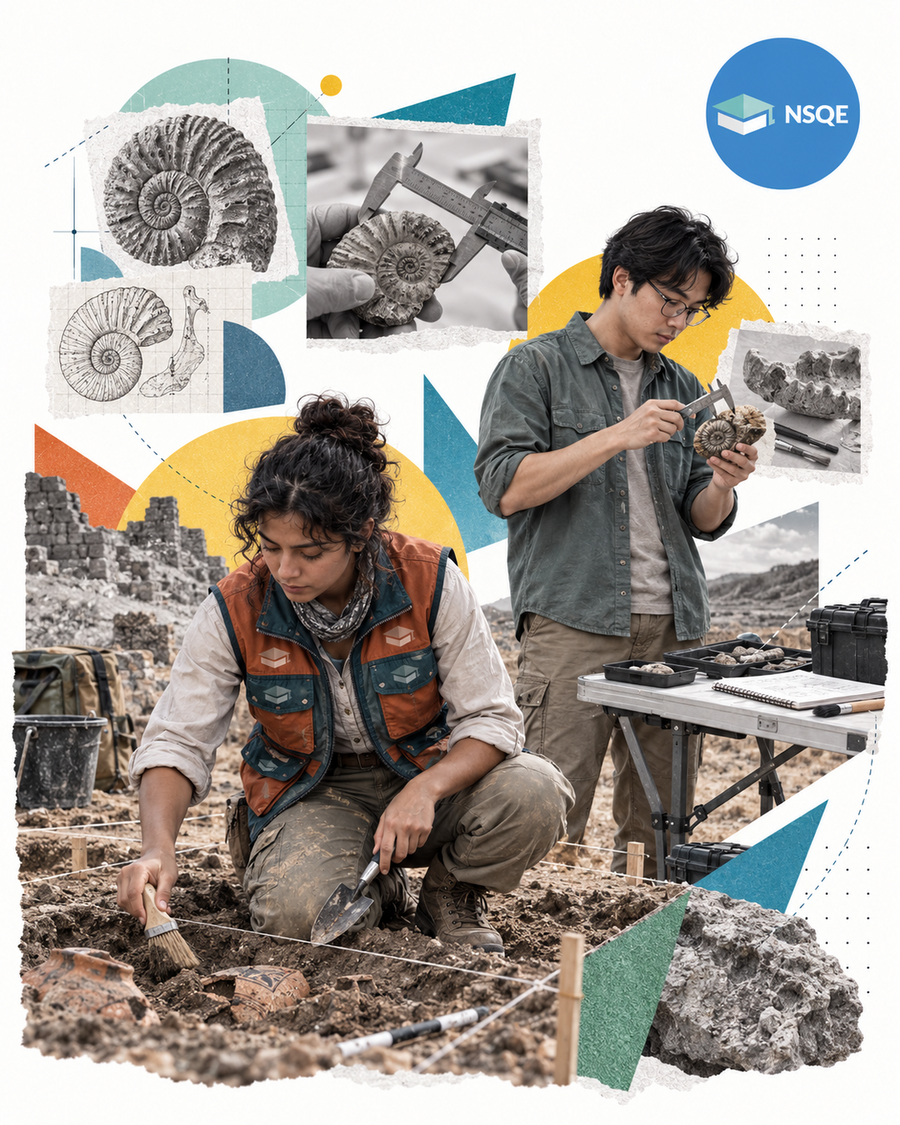
Archaeology may interest you if you want to study past societies through material remains.
The work may include excavations, object analysis, documentation, lab work, interpretation and conservation.
Not all work is done in the field. A large part also involves recording, analyzing and studying what is found.

If you are interested in cultures and societies
Anthropology allows you to study cultures, communities and ways of life.
It can relate to history, although its focus is different. Depending on the area, you can work with current societies, cultural processes, social research or also issues related to the past.
If you are interested in understanding how people live and change in different contexts, it may be a relevant option.
If you are fascinated by fossils and ancient life forms
Paleontology studies past organisms from fossils and other evidence.
If the history of life attracts you more than the history of human societies, this discipline can bring you closer to questions about evolution, extinctions, and ancient environments.
It combines knowledge of Biology and Geology.
If you enjoy teaching
History can also lead you toward teaching.
If you enjoy explaining processes, connecting events, and helping others understand the past, you can look into teaching degrees and education degrees with historical guidance.
Teaching requires more than knowing the content. You also need to learn how to communicate it and adapt it to different students.
If you are interested in preserving heritage
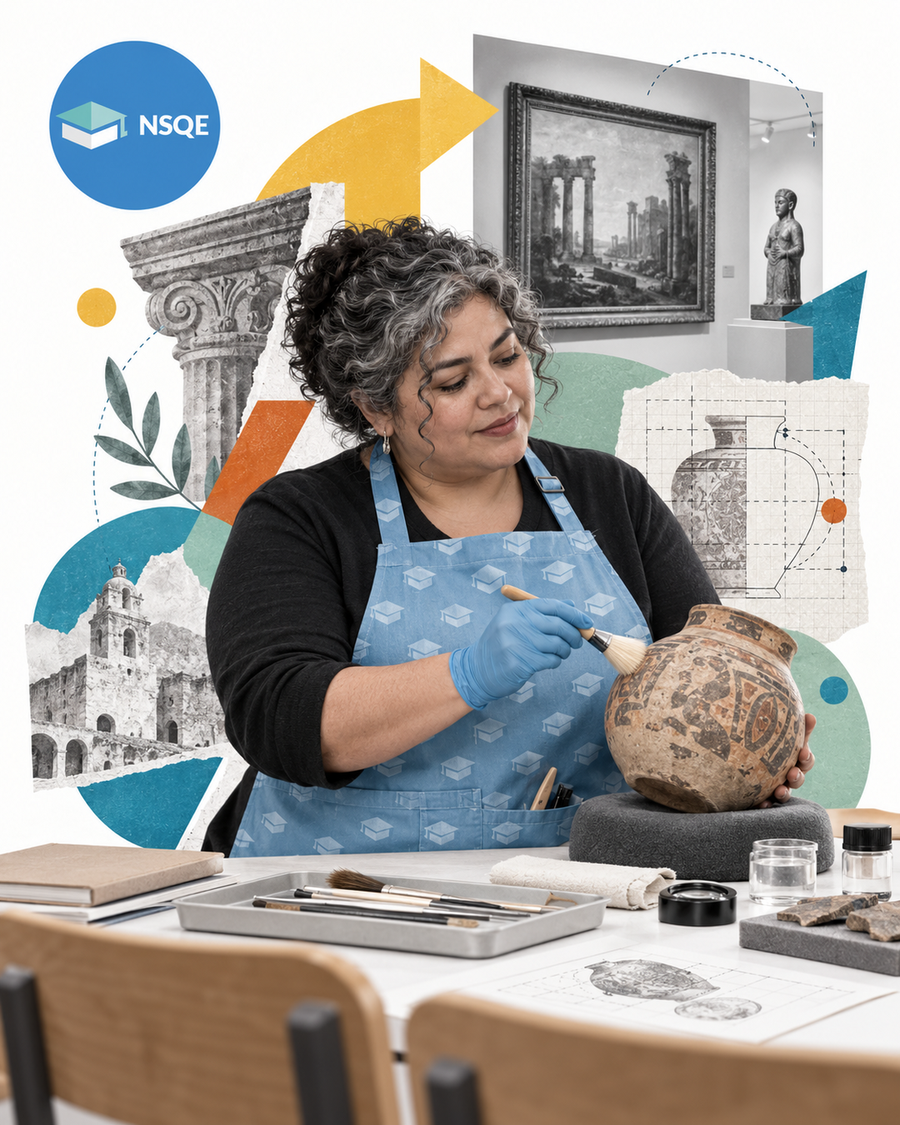
Museology, conservation, cultural management and heritage can relate to history from an applied perspective.
You can work with collections, archives, museums, historic buildings, exhibitions, and cultural projects.
If you are interested in the past but also organizing projects and working with the public, these options can be especially appealing.

If you enjoy writing and communicating history
Journalism, outreach, audiovisual production, editing, and content creation can allow you to work with historical topics.
Documentaries, books, podcasts, exhibitions, and digital content require rigorous research and narrative ability.
You can study History and later specialize in communication, or start from a media degree and develop a thematic specialization.
How to choose?
Think about which part of history you enjoy: documents, objects, societies, cultures, teaching, conservation, or outreach.
- History + documents can lead you toward historical research.
- History + fieldwork can bring you closer to Archaeology.
- History + cultures can lead you toward Anthropology.
- History + communication can open paths in outreach and media.
The NoSeQueEstudiar Career Test can help you connect that interest with your abilities and way of working before narrowing down your options.