
Exploring Emerging Technologies in the Service of Journalism
The Role of the User Experience Designer in Immersive Journalism
The journalism is experiencing a revolution in the way information is presented thanks to emerging technologies.
The user experience design in immersive journalism combines journalistic storytelling with technologies such as virtual reality (RV), augmented reality (RA) and mixed reality (RM) to create more immersive and engaging news experiences for the public.
We will look at how emerging technologies serve journalism and how user experience design plays a fundamental role in this evolution.
The potential of immersive journalism
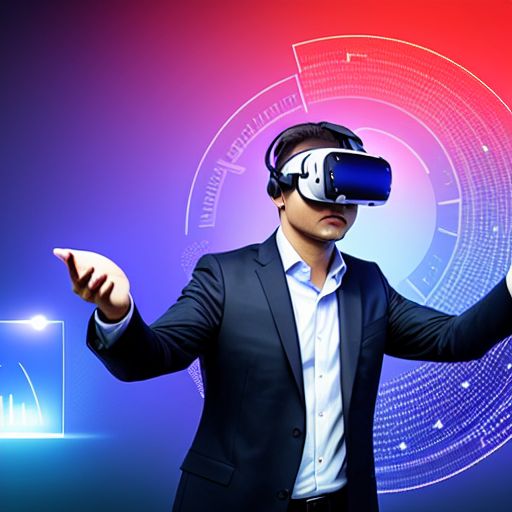
Immersive journalism has revolutionary potential to transform the way information is presented and the public is engaged.
By combining emerging technologies such as virtual reality (RV), augmented reality (RA) and mixed reality (RM), immersive journalism offers more immersive and exciting experiences for users.
Some key aspects of the potential of immersive journalism:
- More immersive experiences: Immersive journalism allows the public to dive into stories in a completely new way. Through RV, users can explore virtual environments that recreate real places and situations, giving them a more immersive and vivid experience. RA and RM, for their part, can overlay virtual elements onto the real world, adding layers of contextual information to the user experience.
- Greater emotional impact: By creating more immersive experiences, immersive journalism can generate a greater emotional impact on the public. When immersed in a story, users can feel more connected to the characters and events, allowing them to experience empathy and understanding in a deeper way. This can help raise awareness and foster social change.
- Interactivity and active participation: Unlike traditional media, immersive journalism allows users to interact and participate actively in the story. Users can explore different perspectives, make decisions and take part in interactive activities within the virtual or augmented environment. This fosters greater engagement from the public and gives them a sense of control over the news experience.
- Personalization and adaptability: Immersive journalism also offers the possibility of personalizing the user experience. By using tracking and data analysis technologies, media outlets can adapt immersive stories to each user's interests and preferences. This allows for a more relevant and engaging experience, which in turn can increase public engagement and loyalty.
- New forms of storytelling: Immersive journalism challenges the traditional conventions of journalistic narrative. By leveraging the capabilities of emerging technologies, media outlets can experiment with new ways of telling stories, such as non-linear narration, interconnecting different multimedia elements and creating immersive virtual worlds. This stimulates creativity and innovation in the way information is presented.

The potential of immersive journalism lies in its ability to offer more immersive experiences, generate a greater emotional impact, foster active participation, personalize the user experience and explore new forms of narrative.
As emerging technologies continue to evolve, immersive journalism will continue to expand its boundaries and offer new possibilities to inform and engage the public.
When it comes to designing effective immersive experiences in journalism, the user experience design (UX) plays a fundamental role.
Fundamental elements of UX design and how they apply to immersive experiences in journalism:
Intuitive interface design: In immersive experiences, interface design must be intuitive and easy to use. Users must be able to navigate and interact with the virtual or augmented environment effortlessly. This involves using clear visual elements, intuitive icons and controls that are easy to understand and use.
Example: In an immersive journalism application featuring a virtual recreation of a conflict zone, interface design must allow users to explore different areas and intuitively access additional content. Icons and visual elements that clearly represent the actions that can be performed, such as "walk" or "zoom in", can be used.
User-centered usability: Usability is essential in immersive experiences. UX designers must take into account users' needs and behaviors when designing interaction and navigation. This involves conducting usability testing and gathering user feedback to continuously improve the experience.
Example: In an immersive journalism project featuring an interactive augmented reality story about the climate crisis, designers must ensure that users can easily access key information and participate in interactive activities related to the topic. Usability can be improved by simplifying actions and optimizing the way content is presented.
Meaningful interactivity: Interactivity plays a crucial role in immersive experiences. It allows users to actively participate and personalize their experience. UX designers must incorporate meaningful interactions that enrich the narrative and allow users to explore different aspects of the story.
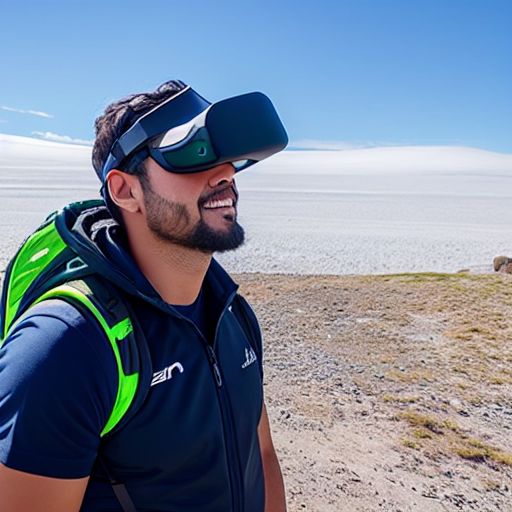
Example: In an immersive virtual reality report on a scientific expedition in Antarctica, users can interact with virtual objects, take measurements and discover additional data. These interactions provide a more enveloping experience and allow users to explore and learn more actively.
User guide: When designing immersive experiences, it is important to guide the user through the story clearly and coherently. UX designers can use VR, AR and MR to direct the user's attention to key elements and provide visual or auditory cues that facilitate understanding of the narrative.
Example: In an immersive journalism project in augmented reality that explores the effects of deforestation in a given area, designers can use visual indicators, such as arrows or signs, to guide users through different locations and show them the environmental impacts in each place.
User experience design plays a crucial role in creating effective immersive experiences in journalism.
By applying the fundamental principles of UX design, such as intuitive interface design, user-centered usability, meaningful interactivity and clear user guidance, enriching and engaging informative experiences can be created.
Practical applications of immersive journalism:
Immersive virtual reality reports:
Media outlets are using virtual reality (VR) to transport viewers to places and events that would otherwise be inaccessible. Immersive VR reports allow users to explore environments and situations in first person, creating a more immersive and emotional experience.
Example: a project, which used VR to tell stories. Users could see and hear the stories while being virtually transported to different places, thus generating greater empathy.
Information in augmented reality:
Augmented reality (AR) makes it possible to overlay virtual elements onto the real world, creating opportunities to provide contextual information in real time. Media outlets can use AR to add layers of information to live events or specific places.

Example: During the Olympic Games, some media outlets have used AR to show real-time statistics and data about athletes and events. By pointing their mobile devices at the broadcast screen, viewers can see additional information, such as personal records, medals won, and records set.
Interactive storytelling in mixed reality:
Mixed reality (MR) combines virtual elements with the physical environment, creating interactive and immersive experiences. Media outlets can use MR to let users interact with virtual objects and take part in the story's narrative.
Example: A media outlet could create a mixed reality experience in which users can explore a virtual museum and discover additional information about the works of art. They could interact with the virtual works, get details about the artists, and access related multimedia content.
Despite the exciting opportunities offered by immersive journalism, there are also challenges associated with these innovations, such as production costs, the need for greater technical training, and ethical challenges related to the accuracy of information and user privacy.
Media outlets must address these challenges responsibly and be willing to learn and adapt as they explore and experiment with immersive journalism.
Media outlets are using these emerging technologies to tell stories in a more impactful and immersive way. However, they must also face challenges and ethical considerations as they explore these innovations.
As these emerging technologies continue to develop, it is crucial to address concerns related to accuracy of information, user privacy and potential bias in immersive experiences.
By combining emerging technologies with the fundamental principles of UX design, immersive journalism has the potential to transform the way we consume and engage with the news. However, it is also essential to address the ethical and practical challenges associated with these innovations.
Ultimately, user experience design in immersive journalism, also called spatial journalism invites us to explore new frontiers in the way we experience and understand the world around us.