Simone de Souza Guimarães
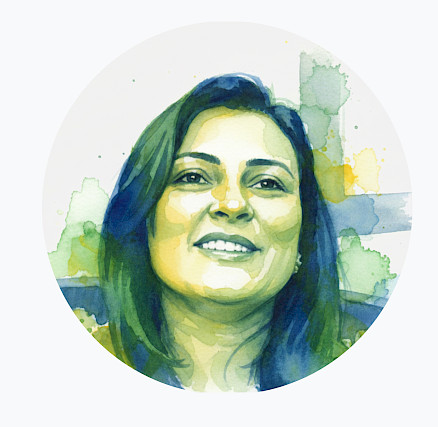
Dr. Simone de Souza Guimarães, who kindly participated in the virtual interview, is a Business Administrator, graduated from the Centro Universitário do Norte (Uninorte); a specialist in Total Quality Management from the Universidad Federal del Amazonas (Ufam); and holds a Master’s in Production Engineering, with a specialization in Production Management, also from Ufam. She holds a Doctorate in Administration from the Universidad Nacional del Rosario, Argentina (UNR), and a Postdoctorate in Education from the Universidad de Flores, Buenos Aires.
With two decades of dedication to the Sistema CNC-Sesc-Senac, she has held important positions such as regional director of Sesc-AM, general director of the Facultad de Tecnología Senac Amazonas (Fatese) and superintendent of Fecomércio-AM. Currently, she serves as Executive General Director of the National Confederation of Commerce (CNC) and is the author of the book "Democratizing knowledge doesn't cost much".
From a young age, Simone found her affinity for administration, although at first she thought about dentistry, at seventeen she chose administration. Her path has been one of constant learning and dedication, where study has been a fundamental compass: "The only thing that will help you improve your life, to be a reference in what you do, is studying."
Simone discovered her passion for management, a field that captivates her because "you work with people and you apply everything you learned in theory to practice". She even had a stint in the technology area as an intern, always focused on organization.
Her commitment and responsibility since her university days opened many doors for her. Her dedication as a student earned her an invitation from a professor to coordinate the public administration course at the Universidad del Estado de Amazonas, an experience she describes as "incredible learning". She emphasizes the importance of connections and interaction with professors and classmates during the university stage.
Simone is a clear example of perseverance: "You don't open doors, you have to work hard and sometimes earn little, but over time you will make a name for yourself in the market". Even after getting married and having children, she continued her education and earned a master's degree, a doctorate and a postdoctorate.
For those considering a degree in administration, Simone advises: "You have to be skillful, careful, know mainly how to deal with others". She also highlights the importance of enjoying work, of finding something you are passionate about in your career and enjoying what you do.
In her role as General Director of the Confederación Nacional de Comercio, Simone is immersed in an exciting system that connects business owners with the social arms SESC and Senac, generating an impact in areas such as tourism, leisure, culture and sports. Her current projects seek to highlight the confederation's contributions to society and to merchants, work into which, without hesitation, she has put "all her heart".
Dr. Guimarães leaves us an inspiring message for young people, a true roadmap to success and professional satisfaction: "Don't give up on your dreams... pursue your goals, do what you enjoy... having ethics, being human, treating people well always seeking the best... This will undoubtedly make you happy and you will undoubtedly be a good professional".
Interview with Dr. Simone Guimarães
Introduction
Can you give a brief introduction and tell us about your professional career?
My name is Simone Guimarães, I am a Business Administrator, specialist in Total Quality Management, Master's in Production Engineering, PhD in Business Administration from the Universidad Nacional de Rosario, in Argentina and Postdoctorate in Education from the Universidad de Flores. Currently I am the General Director of the Confederación Nacional de Comercio. And I have also worked in several areas, in the area of Education.
The vocation for Business Administration
How did you discover your vocation? Was it something you always knew or did you discover it over time?
I went to study Business Administration when I was very young, but I identified with it because of a few things: I liked things to be extremely organized. Later I ended up going in a different direction: education. I worked at the Universidad del Estado de Amazonas, then in the area within the retail social service and in the area of corporate education. And only later did I truly dedicate myself to the management area, which I also fell in love with because you work with people and you apply everything you learned in theory to practice, besides dealing with a number of things, including corporate education itself. That is when I discovered my vocation within this area. I like the field I studied, I am a true Administrator, because I enjoy it. During that time at the university, I ended up wanting to and specializing even further in the area where I work. That is also why I am a PhD in Business Administration.
Discovering the career path
Was there a mentor or close family member who influenced your decision?
Vocation. When you are very young, you enter a University, you take the entrance exam, you really don't know what you want, right? So much so that at the beginning of it I thought about being a dentist and, at seventeen, I ended up going to the Faculty for Administration. I always had it completely clear that I like to start something and finish it. I don't like to start and stop halfway, or change. And that's why I decided to go all the way. I had no one in my family environment who had already been an administrator or with whom I had to live with that. You have some pains, some things, but, in the end you realize. And I saw that I liked these areas to work in. Administration, for example, has many areas where you can work: within the human resources area, within the technology area, because you learn technology management, the entire management area within an organization.
I even mention technology because my administration course at that time was with an emphasis in systems analysis. Business administrator with an emphasis in systems analysis. So much so that I worked in the technology area for a while as an intern and it was an area that I also liked very much, but purely in the area of organizing things, not in the technological part of building computers. But, that's what you get, identifying yourself little by little. Sometimes we enter a course and we don't know what we want, and in the middle of the course you have: I liked that, I liked this area, I liked this part of the course, because you're not going to like everything. Law is like that too, you have an area of administrative law, tax law and so on, and you identify with the area in which you have a vocation, and that's what happened to me.
Responsibility and opportunities
In your early years, how did you overcome academic and personal challenges?
When you get your education, there aren't several open doors. But I always say that the atmosphere at the School is an atmosphere where you meet a lot of people. And there are people who many times already have a university degree or already have a job, so you end up being a bit of a mirror, right?, of who you are. If you are an organized person, your classmates will see you as an organized person. If you are a responsible person, you meet your obligations, your classmates will see that that person is also a dedicated person. And that is what happened to me.
I was a person, I was always a person very dedicated to my studies and that's why I had the opportunity. Shortly after graduating, during college I did an internship, in the case of Amazonas in the industrial district where there is a large industrial center. I was an intern in the IT area, because my boss at that time was my classmate and didn't know me personally, but knew about my schoolwork. At the university it circulated among colleagues and he told me he wanted to hire this person and I went to do an internship there.
And then, some time later, I ended up being called by the professor who worked as our management theory professor, and who took over as director at the Universidad del Estado de Amazonas and ended up inviting me to coordinate the public administration course at the Universidad del Estado de Amazonas. So, it was an incredible learning experience and I always say it was through all of this, right?, through a story you built in college, about the friendships you ended up making in class with the integration with professors and students.
I didn't have one person, or that 'My father has a big company, that's why I have a job,' not me, that's how I got it: it wasn't easy, at first nothing is easy. You don't open doors, you have to work hard and sometimes earn little, but over time you will make a name for yourself in the market, you will show that you are a committed and responsible person. And this is making a difference and, of course, never stop studying, because during all this time I got married, had children, everything else, and still I didn't stop studying, so I did a master's degree, a doctorate, a postdoctorate.
Vocation found, with no plans to change
Did you ever consider changing degrees?
I never thought after entering university and that I would identify with the program, about changing fields. Maybe, adding a few more things, but changing degrees. No. I ended up identifying with it during college and in the course of the job market that I adapted to and managing to move up to some positions in which I felt comfortable and good. I felt I had a true calling to be an administrator, so I never thought about changing.
Support in academic education
How did you handle costs and financial challenges during your professional training?
I know many people struggle with this, financial resources to pay for university expenses, to go to graduate school, and so on. During my graduation period, I really had help from my parents to be able to study, and when I finished, nineteen years old, I was already studying, I ended up getting an internship, right?, so I helped with some expenses, not all, but you can start covering food, spending on school supplies, books and materials. Then, the other courses were paid for with resources that came from my work. So thank God I had my parents to give me all the support and the necessary support, so I could take the program with peace of mind.
Commitment and passion, keys to success
What skills do you consider most valuable to develop throughout your career?
I think we can say that the greatest skill, for your career, is commitment, responsibility and truly doing what you love, because if you work, or study in something you dislike, it is something that will not work out in the future. You have to have, to identify something in your program, as I said before not everything you see will you like. But there are areas of your degree that you identify during graduation, which is an area you want to dedicate yourself to. Therefore, enjoy what you do. It is essential for you, to be able to face all challenges.
Advice for aspiring administrators
What advice would you give to someone who wants to explore your field?
A piece of advice for those who are thinking about a degree in administration is to know that it is a broad degree, but with a lot of competition. So you have to be skillful, careful, and above all know how to deal with others. Know that not everyone around you is like you, all people are different and we have to understand what the person next to us is like. It is knowing that you are going to deal with people. Administration is dealing with people. This is a skill you also acquire. Knowing how to organize your life, knowing how to organize your dashboard, enjoying what you do. If in the middle of your degree you realize that you don't like it in any way, you don't identify with it, it really is about switching to another one, but try to avoid constantly changing. Try to find within your degree what you think you can pursue, specialize in it. That's my advice.
The work at the Confederación Nacional de Comercio
Are you working on any project or initiative that you would like to share with us?
I work at the National Confederation of Commerce. It operates with two social branches, which are the Social Service of Commerce and the National Commercial Presentation Service. And the confederation works with the business owners linked to commerce, and the social arms SESC and Senac handle the people who work in commerce in the areas of tourism, leisure, culture, sports.
We have a wide range of areas to work in, it is very rewarding, so we have several projects within the organization, even just a few days ago Brazil, across all of Brazil, the Semana S commerce week, which mobilized the whole country, in which we had the opportunity to show parliamentarians what our responsibilities are, what we do for society and for our target audience, who are the traders. What we can do and what we do for commerce business owners.
So, my projects today are focused on the area in which I work, which is within an entity as Executive General Director. The commerce system is fascinating, so I have been working within the area for twenty years, in this zone, first within a Commerce Federation and now within a larger scope, which is the National Confederation. So this is my project today, in which I have worked and achieved, and I have worked with all my heart.
Message for young people
Is there anything else you would like to share or any message for the next generation?
For you, young people, don't give up on your dreams. The only thing that will help you improve your life, to be a reference in what you do, is studying. And this is not for just anyone; no one forces you to study, you do what you like, you have to find something you identify with. Study is essential for the country's growth and for your own growth. With it you will conquer the world, with education and instruction, you achieve everything you need. So don't give up, seek your goals, do what you like, dedicating yourself and having responsibility and commitment to what you do. Having ethics, being human, treating people well, always seeking the best in the person beside us. This will undoubtedly make you happy and you will undoubtedly be a good professional.
Thank you for the opportunity. Dr. Simone de Souza Guimarães