
Interview with Johan Potma
The behind the scenes of becoming an illustrator
Knowing what kind of training a professional has is extremely interesting, because beyond entering the university world, and studying a degree to earn a diploma, there are careers that require prior inspiration or even have the need to acquire new tools beyond what an undergraduate study at an academic institution can provide. In this way they can obtain a complement for their future work development.
There are people who first choose their degree and then delve into some aspect of the career. But there are also many people who are guided by their motivation, by what they love to do or even enroll in a degree to deepen an innate gift, to obtain new skills and be able to grow within a career they are passionate about.
On certain occasions, people feel that they want to learn more about a particular subject. This situation is common among illustrators, for example, where sometimes the desire to perfect a style leads them to study a degree and enjoy the work they produce. In these types of careers, work is not seen as such, because it blurs with the passion for doing it.
Our interviewed illustrator told us that in his beginnings he started by selling small originals at a flea market, as a way to earn some money to live and pay his rent, and in that way he intertwined both ways of carrying forward his illustrations, doing his own projects and doing some work for third parties.
Many professionals need a certain foundation to be able to build their own plans on it. For that reason, in certain circumstances it is necessary to mix independent work with dependent work to survive until finding an audience that can admire personal art.
Is the illustrator's task simple?
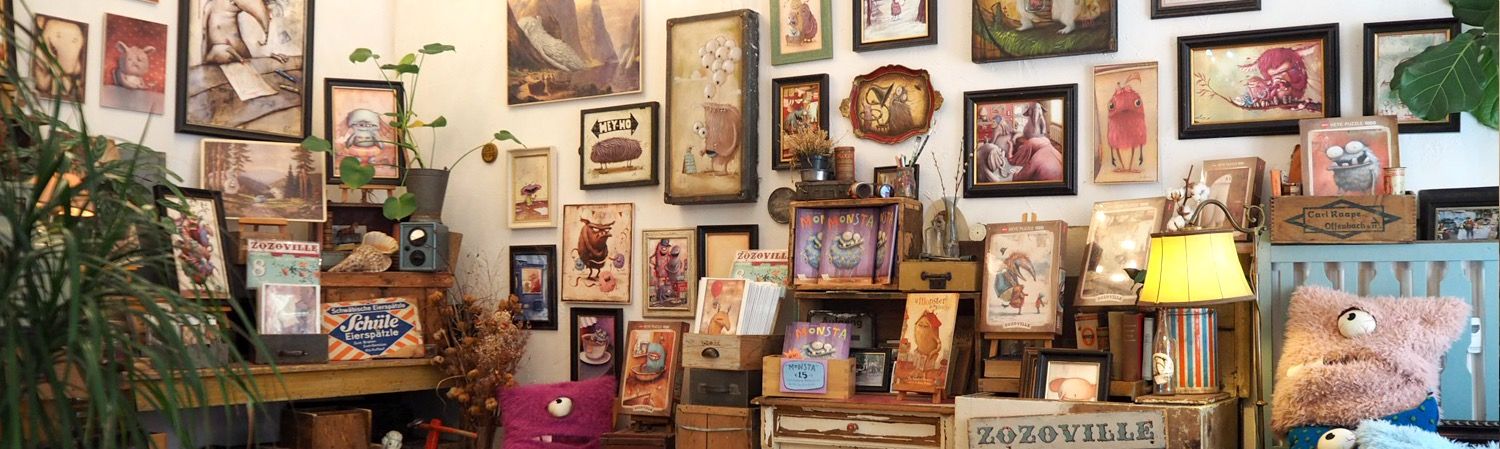
It's a mix of things. Because it consists of drawing, painting, thinking about some kind of merchandise, going to events to show the work we do, showing our world. That's the way I can tell people to be aware that I am here and that what they see is my art.
How did you decide: “I want to do this”?
I come from the world of skateboarding. As a kid I was a fanatic. Before that I was a surfer, but since there was no surfing at home, I started practicing with the skateboard, until it became my passion. I immersed myself in it and practiced every day, I thought about skateboarding all the time and my art also started to be about that. When everything I saw was about skateboarding, my work was influenced by it. When I noticed it I opened my eyes, telling myself: this is the work of someone who gets paid to make images about this and I thought it could be a job for me. I felt a great passion for doing it because of my lifestyle, so I decided to pursue it. I focused more on drawing, because I needed to be able to do it well.
My work has a lot of humor, it's part of my personality. Since I was a kid I've been doing things that I have tattooed in my head, I like to play with them and I try to shape them. That's how it went from a vague idea to an acceptance of what I wanted to do. At some point I thought I should work in advertising, because they work with interesting illustrations and that's why I thought I could do it. That was the reason that led me to enroll in an advertising school for 4 years, but I also went to an art and graphic design school. But in the end I realized what I didn't want to do: work.
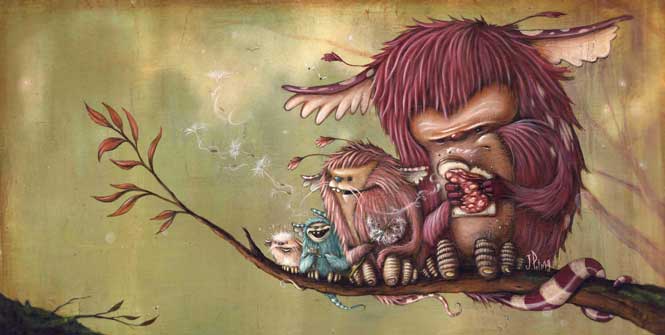
People talked about money and how much they would earn for a job, but for me that wasn't the most important thing, because what I really wanted was to be with those I admired, because they did cool things, what I was looking for was purely artistic.
Money for me meant something secondary, because for me happiness was about doing what I loved. So I did what I wanted to do, which was to illustrate, because I felt that was a real job. I worked for someone and I didn't have to rely on myself to be able to be an artist on my own.
Following that path I began to create more and more, and it became an endless stream of images and stories during those 4 years of coursework. As soon as I started on this journey I knew I had arrived at what I wanted, that that was exactly what I needed, my paradise. Being at school and doing all those different experiments, because I could use and do whatever I wanted. I could work, make prints, everything was at my disposal for me to use.
For me it was like living in a big playground, I could use a lot of things, mixing a little from here and a little from there, that's what made my style eclectic.
What do you think makes you different from the rest?
I think it's important to develop your own voice and that's what counts. The way you make your style unique compared to what you see. That's how I turned into an inner search for my own star, the one that says why you do things in a certain way and how you can keep nurturing that star so it can stay interesting. My search was based on mixing different things, making my own cake. I feel like I cook and this is the cake you make but minds are in degrees with different flavors that contribute with their perspectives. That's how I got to what I am today, it's the result of what I do now, because it's still eclectic, I use collage papers and build different layers, and then I tell my stories.
Do you feel you are happy with the degree you chose?
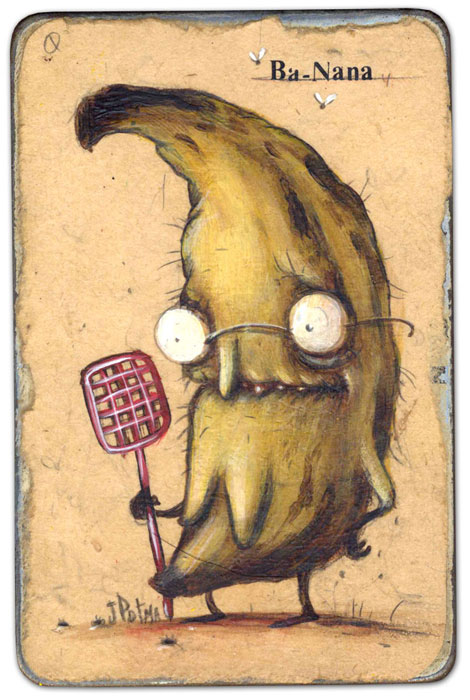
I live a dream, I feel like I never went to work. I have a good income and it's all mine. Nobody tells me what I have to do or when, I don't have a job, I have a beautiful hobby that luckily I can do and they pay me.
It always amazes me when I tell people what I do and I hear myself saying it. It's amazing, because when I was young I never stopped to think about whether I wanted to plan anything nor did I expect anything, I just kept doing what came naturally to me.
I don't think I need money, because I see that people with money and advertising are not happy, they are not content. What I do gives me happiness, that's why I always thought it was right, and that I had to keep going with what made me feel good. When I was young, I could live on little money, I lived in Berlín and life wasn't expensive there, even rent was affordable. I could sell some of my work at the market and with a little money I could get by. Besides, I could get most of my study materials very cheap, I would buy old paper, some pieces of wood and with a little paint it turned out really well. I even still have some of my tools from 20 years ago.
On top of that I realized that you don't need a lot of paint to tell stories, I think with relatively cheap, little material you can do it. What you do need is a computer and digital material, so you can digitize everything.
I don't feel I expected what happened with my career, it just happened. With my art I tried to lift people's spirits and tell funny stories and put a positive focus on it, at some point I think that comes back. It's something I love to do, and with that we all win.
I think if you pursue what you love, you don't think much about taking it as a job, at some point my mind alone started working and carried it forward, and that way of seeing it always brought me happiness. I think money without having happiness or having the willingness to be able to relax, enjoying what you do, would not be a way of living for me.
I am grateful to be able to do what I do and that people also like my way of expressing my work.
What kind of advice could you give to a 16 or 17-year-old teenager who would like to do this?
I think the hardest thing is finding something you are truly passionate about, if you are 16 your head is all over the place, you don't yet really know who you are. The school system places expectations at that age, expecting you to be able to make a choice and I think you should be able to play until you are 40. Because that is when you have the experience to see the mistakes you make, to decide to walk away from something and know what you want to do.
If you are good at kicking a ball, you know you enjoy it and you laugh. I think it is good to follow that system, do what makes you feel good, stay away from doing wrong because that will bring you some sadness.
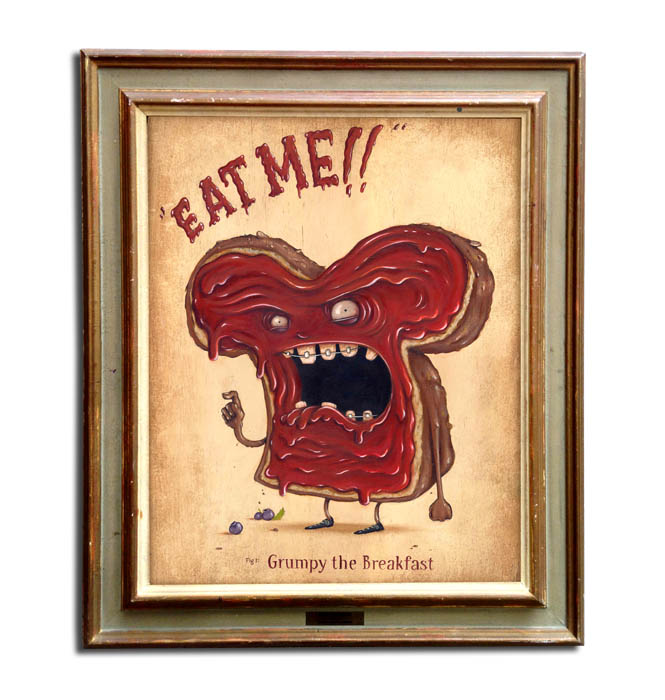
It is hard to make those decisions at 16. You have to have blind faith no matter what happens, not everyone always finds a career that manages to make them feel good. When you are 16, it is important to choose what you are good at doing, and what you can really come to enjoy.
I think sometimes it is also good to make some mistakes. Because it is important to explore boundaries.
I know it is hard to give advice, but that would be mine, just follow what makes you feel good and keep going with a positive flow, because that is what I told myself when I started on this path.
We thank Johan Potma, for allowing us the interview and letting us into his studio "the Cheese Mountain Tragedy" on Schönleinstrasse 32, 10967 Kreuzberg, Berlin during the #Rutansqe.