
Art degrees
Acting, music, dance, film, photography, animation and several more: they are the artistic degrees studied at Spanish-speaking universities and institutes.
If you spend the day drawing, recording videos, putting together song playlists or rehearsing with your band, there are studies that start from what you already do.
What art degrees have in common
Studying art is mostly about doing: rehearsing, composing, filming, drawing, staging a work. Theory (history, language and technique of your discipline) goes along with practice, and what you present is usually your own work rather than a written exam.
The degree, length and admission requirements depend on the institution and the country, so check them in each program before enrolling.
There are also degrees that are beside the stage or the camera and not in front of it: producing, writing scripts, designing the scene, organizing cultural events or teaching. They are part of the art world, even if you work behind the scenes.
The art degrees
Performing arts
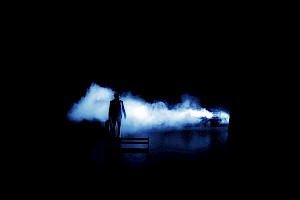
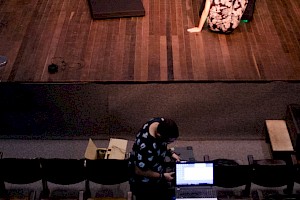
For those who enjoy being on a stage or putting together what happens on it: Acting, Dance, directing and show design.




Music
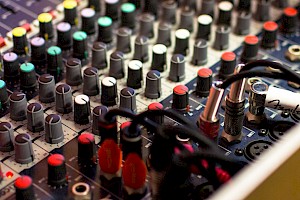
Playing, singing, composing, producing or studying music from different angles. It includes Music and degrees that combine it with other areas, such as teaching or therapy.



Film, television and sound
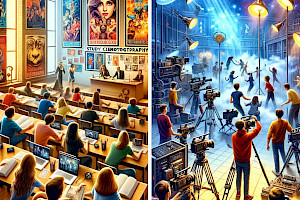
Telling stories with image and sound, whether writing them, directing them, recording them, editing them or producing them.




Visual arts
Thinking and communicating with images: painting, sculpture, drawing, comics, animation and photography.




Cultural management
For those who want to organize and take care of what others create: projects, events and cultural heritage.

Where to study art
 Universidad de Chile (UChile)Santiago · PublicActingFine ArtsDanceEntertainment DesignMusicMusicologyAudiovisual Communication
 Universidad Autónoma de Aguascalientes (UAA)Aguascalientes · PublicCinematographyFine ArtsCultural ManagementMusicAnimationActing
 Universidad Autónoma de Baja California (UABC)Mexicali · PublicFine ArtsDanceAudiovisual ProductionActingMusic
 Universidad de Bogotá Jorge Tadeo Lozano (UTadeo)Bogotá · PrivateFine ArtsCinematographyAnimationPhotographyCultural Management
 Universidad del Cine (FUC)Ciudad Autónoma de Buenos Aires · PrivateFilm and TV DirectingPhotographyFilm and TV ScriptwritingAudiovisual ProductionAnimation
 Corporación Academia Superior de Artes (CORPOASA)Medellín · PrivatePhotographyAnimationAudiovisual CommunicationCultural Management
 Instituto Universitario Patagónico de las Artes (IUPA)General Roca · PublicMusicDanceFine ArtsActing
 Universidad Autónoma de Chihuahua (UACH)Chihuahua · PublicMusicFine ArtsDanceActing
How to choose which art degree to study
Pay attention to what you do when no one asks you to: if you record and edit videos with your phone, if you draw in your notebooks, if you sing or play with friends, if you organize everyone for a party or a school exhibition. That clue is usually more useful than the name of the degree.
Then ask yourself if you prefer to create the work yourself, help make it possible for others or teach it. A person who enjoys organizing might feel better in Cultural Management than on a stage.
If you're torn between two, like Photography and Cinematography, compare the subjects for each in its profile and the admission requirements. The career test shows you which ones your answers fit best.
To read before choosing



Frequently asked questions
Do I need talent to study art?
You don't need to be a genius: you need to practice, and you learn technique by taking courses.
How long do art degrees last?
It depends on the degree, the institution, and the country. In each degree's profile you see its most common duration when it's listed; confirm it in the program you're interested in.
Do I have to do an audition or test to get in?
For many, yes: an audition, an interview, or a portfolio of your work. Each institution sets its own, so check the program's requirements.
Can I study art if I don't know which discipline I want?
Yes. Some degrees, like Fine Arts, are broad and let you try several techniques. Read about them in their profile and compare.
Can I study art remotely?
It depends on the program. Some offer remote or blended formats, and others require in-person attendance because of the practical work. Check the format at each institution.