
Working in the construction of sports courts and surfaces
The construction of a court transforms a technical project into a usable surface. Execution must respect specifications and coordinate construction stages. The intended use and the terrain condition the decisions that professionals must study.
The work covers the execution of bases, drainage, finishes and surfaces suitable for specific disciplines, controlling project specifications.
From the initial request to the concrete work
A facility will renovate its court and needs to maintain other activities during the works. The team organizes stages, suppliers and controls. The acceptance of works requires reviewing the documentation and the expected results, as well as observing the final appearance of the surface.
Tools and knowledge put into practice
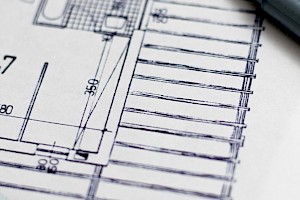
Construction plans, specifications, progress records and quality controls are used. Coordination makes it possible to relate deliveries and tasks that depend on each other. Construction decisions do not automatically transfer between terrains or disciplines.
Civil works. Plan and control construction interventions in spaces and facilities.
Quality control. Establish conformity criteria and review products, materials or processes.
Construction safety. Prevent incidents during construction and maintenance work.
Careers and teams involved
Civil Engineer. Is involved in calculation, execution and technical control of works and structural systems for sports spaces.
Facilities technician. Performs maintenance and support of infrastructure, equipment and facilities within their technical specialty.
Organizations and services it interacts with
Governments and municipalities. They administer public policies, community programs and sports facilities for collective use.
Professional firms and services. They provide legal, accounting, administrative, engineering and risk management advice.
What you can study to get closer to this activity
Civil Engineering
Civil Engineering. Addresses technical problems of infrastructure and construction. Its application to sports requires knowing the project and its conditions. It covers basic sciences, materials, structures and practices related to execution and control.
Architecture
Architecture. It relates to the design of spaces and their uses. Sports facilities require understanding practices, circulation routes, and services. Review design studios and documentation, and compare the approach with that of engineering.
Industrial Engineering
Industrial Engineering. It lets you study how production and service processes are organized and improved. In sports it can relate to equipment or operations. Compare quality, logistics, and organization projects with product development.

How to compare your interest with the training
If you are interested in seeing how a project takes shape, look at Civil Engineering and its training in materials, construction works, and technical management. Compare that path with designing spaces or maintaining an existing facility.
Designing, building, manufacturing, and maintaining are stages related to different specialties. Safety decisions and technical interventions require people who are competent in their field. A prototype or an idea does not by itself prove that a product or facility meets requirements.
Where to study and what to check before choosing
Compare institutions that offer Civil Engineering and review the curriculum, the internships, and the scope of the degree. The name of a sports guidance alone does not tell you what you will learn. Also ask about admission requirements and the hands-on practical work experience.
 Universidad Mayor de San Simón (UMSS)Cochabamba · Public
 Universidad Mayor de San Andrés (UMSA)La Paz · Public
 Universidad Austral de Chile (UACh)Valdivia · Private
 Universidad de Chile (UChile)Santiago · Public
 Universidad Nacional de La Plata (UNLP)La Plata · Public
 Universidad Nacional de Cuyo (UNCUYO)Public
 Universidad Autónoma de Baja California (UABC)Mexicali · Public
 Universidad Autónoma de Aguascalientes (UAA)Aguascalientes · Public
Distinguish an initial degree from training that requires prior studies. Names and conditions vary by country and institution. If you find a course, a license, a specialization, or a complementary cycle, check what certificate it awards and who it admits.
Collaborating with people and organizations from other countries
A product intended for other markets needs to review uses, specifications, and marketing conditions. Design, manufacturing, and distribution each participate from different responsibilities; translating a sales presentation is not enough.
Designing or maintaining facilities in another country requires studying local conditions and responsible teams. Previous experience can provide questions, but it does not replace reviewing the site, the uses and the corresponding technical framework.
Related activities to keep exploring
- Designing the spaces where sports are played
- Maintaining sports facilities in usable condition
- Caring for turf and preparing playing surfaces
Connect this path with designing courts, equipment and clothing for sports and with sports degrees.