
Spot sports talent and support its development
Observing sports talent means looking at a process, not labeling a person based on a result. It matters to understand how they learn, what habits they develop and in what conditions they practice. Comparison needs to consider different trajectories and opportunities.
The work covers observing skills and training habits without reducing the development of children and adolescents to immediate results.
From the initial request to concrete work
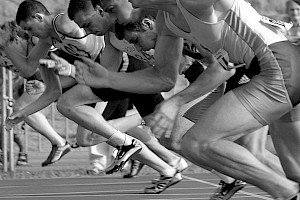
During several sessions at an athletics school, a team records how its participants respond to different tasks. A striking mark may spark interest, but it is weighed against consistency, the ability to learn and the observations of those who teach. Feedback is framed as development possibilities, without promising a professional career.
Tools and knowledge put into practice
Observation records, interviews with those responsible for training and follow-ups over time are used. Information needs context and careful use, especially when it describes minors. A report must distinguish what was observed from interpretation.
Performance observation. Recording behaviors and performances systematically.
Motor development. Understanding and supporting the evolution of movement skills at different stages.
Pedagogical communication. Giving instructions, correcting exercises and giving feedback on learning in an understandable way.
Careers and teams involved
Sports Coach. Teaches technique and tactics, plans sessions and supports athletes' development, respecting the rules and certifications of each discipline.
Physical trainer. Plans and supervises fitness tasks, monitoring progression, load and recovery according to the sports context.
Organizations and services it works with
Clubs and academies. They organize regular practice, hire services, provide facilities and connect athletes with coaches.
Federations and leagues. They establish regulations, licenses and calendars in their disciplines and coordinate competition activities.
Athletes and teams. They seek training, care, advice and services to compete or participate safely.
Laboratories and research centers. They produce knowledge, equipment and analysis useful for performance, health and sports planning.
What you can study to get closer to this activity
Physical Education
Physical Education. Allows you to study bodily practices, learning, and planning. Compare the teaching guidance and the other options within the degree, its practical training, and the scope of the qualification for the context that interests you.
Soccer Instructor
Soccer Instructor. Focuses on a specific discipline. Review technique, tactics, methodology, and practical training, and check what certification the program provides and what specific requirements the training field may have.
Psychology
Psychology. Develops knowledge and methods for addressing psychological processes. Sport is a possible context for practice and specialization. Review the full degree and distinguish professional practice from motivational or leadership training courses.

How to compare your interest with the training
Ask yourself if you enjoy following gradual changes and justifying an assessment. Look for training in motor development, learning, and performance observation; a practice focused exclusively on results leaves out an important part of this activity.
Training to teach a discipline and preparation to work in a school or university may have different requirements. Review the scope of the qualification, the practical training, and the specific certifications; experience as an athlete alone does not demonstrate teaching preparation.
Where to study and what to check before choosing
Compare institutions that offer Physical Education and review the curriculum, the practical training, and the scope of the qualification. The name of a sports guidance alone does not tell you what you will learn. Also ask about admission requirements and the experience gained through practical assignments.
 Universidad Austral de Chile (UACh)Valdivia · Private
 Universidad Nacional de La Plata (UNLP)La Plata · Public
 Universidad Autónoma de Baja California (UABC)Mexicali · Public
 Universidad Nacional de La Matanza (UNLaM)San Justo · Public
 Universidad Autónoma de Ciudad Juárez (UACJ)Ciudad Juárez · Public
 Universidad Autónoma de Chihuahua (UACH)Chihuahua · Public
 Universidad Nacional de Tres de Febrero (UNTREF)Sáenz Peña · Public
 Universidad Politécnica de Madrid (UPM)Madrid · Public
Distinguish an initial degree from a program that requires previous studies. Names and conditions vary by country and institution. If you come across a course, a license, a specialization, or a bridging program, check what certificate it provides and who it admits.
How the context changes by discipline
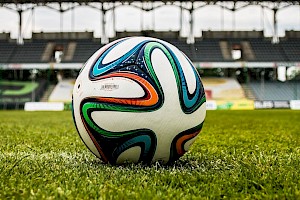
Football. Team sport with training structures, club competition, tactical preparation, and federated refereeing.
Futsal. Football variant played on a smaller court that requires quick rotations, decision-making, and its own rules.
Basketball. Team game based on transition and occupying spaces, with technical instruction, analysis, and competition by levels.
These differences change the work context. Review what specific hands-on knowledge you need to develop, in addition to general training, and which tasks require additional preparation.
Collaborating with people and organizations from other countries
Training can also bring together participants and instructors from different places. In an exchange or camp, it is advisable to clarify objectives, working language, and the scope of certification, without assuming equivalences between training systems.
Collaborating with teams from other countries requires communicating technical criteria and understanding their practice context. Sharing tools does not remove the need to know the discipline or the professional conditions of each role.
Related activities to keep exploring
- Work in sports training and development schools
- Evaluate an athlete's progress
- Support team changes, injuries, and athletic retirement
Connect this path with teaching sports and training those who coach and with sports degrees.