
Teach sports and train those who coach
Working in teaching and coaching involves deciding what a person needs to learn and how to support their progress. The school, the club, and the university raise different questions. Physical Education is a degree for exploring this field; educational training, research, and certifications in a discipline add other paths.
You may be interested in initial play, preparing a season, or training other professionals. To choose, identify the group you would like to work with and the type of decisions you want to learn to justify.
Learning a sport and teaching its fundamentals
Organize the first learning experience in a discipline, from play to acquiring basic techniques. It requires progressions appropriate for each age, a safe environment, and teaching that distinguishes recreational participation from competitive preparation.
Teaching a sport from the first steps
Teaching a sport from the first steps. The work covers designing sessions for learning technical movements, rules, and elementary decisions through progressive exercises and games.
Knowing how to play is not enough to teach. Someone guiding beginners needs to turn a skill into understandable instructions, observe what each person is trying to do, and adjust the plan without losing the objective. Learning begins long before performing a perfect movement.
Working in training and sports development schools
Working in training and sports development schools. The work covers organizing groups by level and objectives to develop skills specific to a sport, combining practice and follow-up.
A development school brings together people who have already had contact with a discipline and want to advance. Organizing that process requires distinguishing levels, agreeing on objectives, and giving continuity to learning. Coordination among instructors is as important as each session.
Identifying athletic talent and supporting its development
Detect sports talent and support its development. The work covers observing training skills and habits without reducing the development of children and adolescents to immediate results.
Observing sports talent means looking at a process, not labeling a person based on a result. It matters to understand how they learn, what habits they develop and in what conditions they practice. Comparison needs to consider different trajectories and opportunities.
Train the next sports instructors
Train the next sports instructors. The work covers preparing those who teach a discipline through pedagogical methods, supervised practice and technical updating.
Training instructors means teaching other people to teach. The work combines knowledge of a discipline with the ability to analyze classes, propose supervised practices and give feedback that helps review pedagogical decisions.
Prepare training sessions and understand progress
It connects practice planning, physical preparation, technical-tactical training and athlete monitoring. Its work depends on the rules and characteristics of each discipline and on the coordination of different professionals.
Plan training for athletes and teams
Plan training for athletes and teams. The work covers organizing workloads, periodization and season goals, with adjustments based on individual responses and the competition calendar.
Planning training means connecting goals, calendar and the response of those who train. The plan works as a working hypothesis that needs monitoring. It is not just about handing out exercises or copying another team's season.
Teach the technique and tactics of a sport
Teaching the technique and tactics of a sport. The work covers applying performance exercises, reading the game, and decision-making according to the demands of individual or team sports.
Technique relates to how an action is performed, and tactics relate to how decisions are made in a game situation. Teaching them requires knowing the discipline and designing experiences that help learners understand when and why to use a skill.
Evaluating an athlete's progress
Evaluating an athlete's progress. The work covers carrying out and interpreting physical tests and technical observations to guide goals and review the athlete's progress.
Evaluating progress means deciding what information shows whether preparation is changing something relevant. An isolated measurement needs context. The purpose of the evaluation, the recording conditions, and the interpretation shared with the team all matter.
Balancing effort and recovery in training
Balancing effort and recovery in training. The work covers recording sessions, perceived effort, and availability to adjust training stimuli and coordinate rest with the support team.
Training monitoring connects the effort performed with recovery and readiness to continue. It is a coordination activity: it requires listening to the athlete, understanding the program, and sharing observations with those who have different responsibilities.
Teaching at school and supporting community initiatives
It covers projects that use sports practice for education, coexistence, participation, and public health. The design prioritizes continuity, accessibility, and safety over talent selection.
Studying Physical Education to teach at school
Study Physical Education to teach in school. The work involves designing classes with motor and social objectives, assessing learning, and adapting to ages and educational curricula.
In school, Physical Education has learning objectives that go beyond preparing for a competition. Those who teach organize bodily experiences, observe participation, and assess what has been learned within an educational project.
Bringing sports to neighborhoods and communities
Bringing sports to neighborhoods and communities. The work involves coordinating accessible activities, arranging spaces, and tracking participation to sustain practice in the community.
Sustaining sports in a community requires understanding who can participate and what conditions make it possible. Spaces, schedules, materials, and institutional connections influence continuity as much as the proposed activities.
Supporting physical activity for adults
Supporting physical activity for adults. The work involves movement proposals for people with different fitness levels, with progression and health referral when appropriate.
Supporting physical activity in adults requires recognizing different starting points, experiences, and interests. The proposal must be sustainable and open to review. Organizing a practice is not the same as performing a clinical assessment.
Coordinating games, recreation, and sports camps
Coordinating games, recreation, and sports camps. The work involves planning events and activities that combine play, education, and operational safety for school or community groups.
A sports camp combines play, group life, and organization. Coordination requires thinking through the full day, from arrival to closing, and connecting activities with people, the environment, and available resources.
Researching and training professionals
It organizes the generation and dissemination of knowledge about movement, learning, technology, management, and sports science. It uses research methods and evaluation of the quality of evidence.
Research how we move and play sports
Research how we move and play sports. The work covers the design of studies, data collection, and analysis of questions about training, health, or participation with appropriate methods.
Researching sports means formulating a question that can be studied with suitable methods. Practical experience can suggest problems, but research requires procedures and criteria to analyze its limits.
Evaluate whether a sports program meets its objectives
Evaluate whether a sports program meets its objectives. The work covers the design of indicators and implementation analysis to understand the results and limits of sports policies or projects.
Evaluating a program requires connecting its objectives with information about what was done and its results. The number of participants can be a data point, but on its own it does not answer all the questions about the project.
Teach sports and physical activity at the university
Teach sports and physical activity at the university. The work covers teaching and assessing theoretical and practical content based on disciplinary knowledge, planning, and supervised practice.
University teaching connects knowledge of a discipline with decisions about how to teach it. It includes preparing content, supporting practical work, and assessing learning. Depending on the institution, it may be linked to research and outreach projects.
Train professionals working in sports
Train professionals working in sports. The work covers the design of continuing education courses for coaches, managers, and professionals, with assessment of competencies and sector needs.
Professional training starts from the needs of people who are already doing a job. It should define what knowledge it wants to update and how it relates to their practice. Short-term training needs a clear scope and consistent entry requirements.
Degrees to compare based on the job you are interested in
Physical Education. It lets you study body practices, learning, and planning. Compare the teaching guidance and the degree's other offerings, its practical training, and the scope of the qualification for the context you are interested in.
Soccer Instructor. It focuses on a specific discipline. Review technique, tactics, methodology, and practical training, and check what certification the program awards and what specific requirements the coaching field may have.
Education Sciences. It addresses teaching and learning problems from educational perspectives. It may relate to proposal design and assessment, but it should not be assumed to replace sports technical training or a specific teaching qualification.
Business Administration. It provides knowledge for organizing resources, people, and processes. The sports context requires understanding how the organization works. Review operations, planning, and budgeting projects, as well as courses with sector guidance.
Psychology. It develops knowledge and methods for addressing psychological processes. Sports are a possible context for practice and specialization. Review the full degree and distinguish professional practice from motivation or leadership training.
Statistics. Explores procedures for studying information and interpreting results in depth. In sports it helps formulate comparisons and recognize limits. Look at mathematics, methods and projects, as well as the presentation of graphs.
Data Science. Combines tools to prepare, analyze and communicate information. The sports context requires understanding the meaning of records. Look at mathematics, statistics, programming and analysis projects with real or simulated data.
Medicine. The base degree studies health and clinical care through scientific training and practical experience. A guidance in sports requires further specialization and checking the professional requirements of the place where you want to work.
Kinesiology. Relates to movement assessment and rehabilitation from a healthcare field. Look at anatomy, physiology and clinical practice. Subsequent sports training builds on that foundation and on the professional scope of the degree.
Special Education. Allows you to explore educational processes, supports and barriers to learning. Its connection to sports depends on the project and on collaboration with other specialties; it is not equivalent to clinical or rehabilitation intervention.
Occupational Therapy. Addresses participation in activities and autonomy from within its professional field. It can contribute to sports and accessibility projects, without being equivalent to training in coaching, teaching or medical care.
Event Organization. It relates to planning, suppliers and operation of events. Sport adds specific formats and rules. Review internships where you have to connect schedule, participants, services and team tasks.
Tourism. It lets you study tourism projects and services. Sport can provide the reason for the trip or the activity of the experience. Check the scope of the degree against the technical leading of specific practices.









Disciplines change the work questions
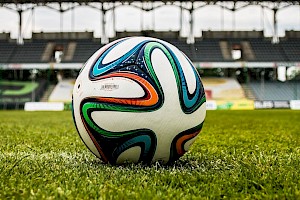
Soccer. Team sport with training structures, club competition, tactical preparation and federated refereeing.
Futsal. Variant of soccer on a reduced court that requires quick rotations, decision-making and its own regulations.
Basketball. Collective game of transition and occupation of spaces with technical teaching, analysis and competition by levels.
Volleyball. Net sport with specific roles, organization of reception, attack and defense and coach training circuits.
Handball. Collective ball and goal game that integrates movements, throws, tactics and tournament organization.
Field hockey. Team discipline with stick and ball technique, tactical preparation and specific surface maintenance.
Rugby. Contact sport that requires progressive teaching, safety techniques and specific competition regulations.
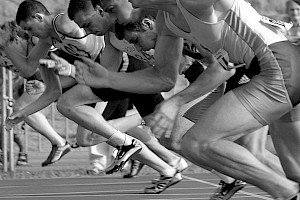
Athletics. Races, jumps and throws that require technique by event, measurement of marks and appropriate facilities.
Swimming. Development of aquatic skills, strokes and events; it requires safety protocols in pools.
Gymnastics. Family of disciplines with technical progression, specific preparation and safety on apparatus or surfaces.
Tennis. Racket sport with learning of strokes, movements and strategies for different surfaces.
Badminton. Racket and shuttlecock sport that requires reaction speed and stroke technique.
Table tennis. Competition of precision and speed with technical and tactical training and refereeing.
Weightlifting. Strength events with lifting technique, load planning and competition controls.
Basic training lets you study a field; working with a discipline requires understanding its specific conditions. You should not assume that knowing one practice prepares you to teach, advise, or intervene technically in all the others.
How to choose between these paths
Compare how you feel about explaining, observing, and reviewing someone else's learning. Then consider whether you prefer preparing a class, following a season, or formulating research questions. Ask for examples of internships and student work: they help you recognize differences that a degree name can hide.
Training to teach a discipline and preparation to work in a school or university can have different requirements. Check the scope of the qualification, the internships, and the specific certifications; experience as an athlete does not by itself demonstrate teaching preparation.
Check the prior studies required by each option. Initial degrees, courses, sports licenses, and postgraduate programs have different objectives and conditions. A career test can help you organize questions to compare with curricula and internships.
Where to start looking for institutions
If your interest is close to Educación Física, compare the institutions that offer that degree. For the other programs, check their profiles and review the options in the country where you want to study. The same sports field can bring together programs of different levels and scopes.
 Universidad Austral de Chile (UACh)Valdivia · Private
 Universidad Nacional de La Plata (UNLP)La Plata · Public
 Universidad Autónoma de Baja California (UABC)Mexicali · Public
 Universidad Nacional de La Matanza (UNLaM)San Justo · Public
 Universidad Autónoma de Ciudad Juárez (UACJ)Ciudad Juárez · Public
 Universidad Autónoma de Chihuahua (UACH)Chihuahua · Public
 Universidad Nacional de Tres de Febrero (UNTREF)Sáenz Peña · Public
 Universidad Politécnica de Madrid (UPM)Madrid · Public
Continue comparing sports areas
You can connect these paths with the sports degrees.