
Join a competition medical care team
Healthcare coverage for a competition starts with its planning. It requires defining responsibilities and coordinating professionals, resources and referral services. Organising the event and clinically attending to a person are different functions.
The work covers the planning of healthcare coverage, initial response, referral and coordination with ambulances and emergency services.
From the initial request to the specific work
An athletics competition occupies several areas of a venue. The healthcare team takes part in prior meetings to understand the programme and establish its coordination with the organisation. During the day it maintains its records and communications. Afterwards, incidents and operational aspects are reviewed to improve future coverage.
Tools and knowledge put into practice
Coordination documents, care records and agreed communication channels are used. The selection of means and procedures is the responsibility of the competent managers. The work requires understanding the operation of the event without losing the criteria inherent to healthcare.
First aid. Respond initially to incidents while specialised assistance is activated.
Emergency management. Prepare response, coordination and referral protocols for incidents.
Participant safety. Anticipate risks for attendees and athletes in activities.
Careers and teams involved
Doctor. Performs clinical evaluation, diagnosis, prevention and treatment; can specialise in sports medicine through additional training.
Nurse. Provides nursing care and takes part in healthcare in accordance with their training and the applicable professional authorisations.
Organisations and services it works with
Athletes and teams. They require training, care, advice and services to compete or participate safely.
Health and rehabilitation centres. They provide health and recovery services through qualified professionals.
Security and emergencies. They support incident prevention and coordinated response in venues and events.
What you can study to get closer to this activity
Medicine
Medicine. The base degree studies health and clinical care through scientific training and internships. A guidance in sports requires further in-depth study and checking the professional conditions of the place where you want to work.
Nursing
Nursing. It allows you to study care and participation in healthcare. At an event it can collaborate with other professionals within its competencies; coordinating a service or knowing first aid does not represent the same training path.

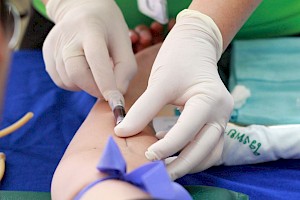
How to compare your interest with training
Medicine and Nursing allow you to explore different responsibilities within care. Review the care internships and the specific preparation required in each context. First aid training alone does not represent these qualifications.
Clinical tasks and professional interventions require the corresponding training and authorizations. An educational activity about well-being or brief training does not replace a health qualification. In shared projects it must be clear who evaluates, who decides and who supports.
Where to study and what to check before choosing
Compare institutions that offer Nursing and review the curriculum, the internships and the scope of the degree. The name of a sports guidance alone does not tell you what you will learn. Also ask about the admission requirements and the practical work experience.
 Universidad Mayor de San Andrés (UMSA)La Paz · Public
 Universidad Austral de Chile (UACh)Valdivia · Private
 Universidad de Chile (UChile)Santiago · Public
 Universidad Nacional de La Plata (UNLP)La Plata · Public
 Universidad Nacional de Cuyo (UNCUYO)Public
 Universidad del Salvador (USal)Ciudad Autónoma de Buenos Aires · Private
 Universidad Autónoma de Baja California (UABC)Mexicali · Public
 Universidad Autónoma de Aguascalientes (UAA)Aguascalientes · Public
Distinguish an initial degree from training that requires previous studies. Names and conditions change by country and institution. If you find a course, a license, a specialization or a complementation cycle, check what certificate it awards and who it admits.
Related activities to keep exploring
- Study Medicine to work with athletes
- Organize a tournament from planning to competition
- Work in sports event security
Connect this path with caring for health and making sports more accessible and with the sports degrees.