
Caring for health and making sports more accessible
The sport brings together professionals who assess health, support recovery and review barriers to participation. Medicine, Kinesiology, Nutrition, Psychology and Occupational Therapy approach different problems. Inclusion also needs educational, design and organizational perspectives.
Before choosing, distinguish healthcare, adapted teaching and service coordination. They can collaborate on the same practice, but they require knowledge and responsibilities that should not be presented as equivalent.
Adapting proposals and expanding participation
It brings together sports teaching, competition and management for people with disabilities and diverse audiences. Adaptations respond to real conditions of accessibility, rules and autonomy and should not replace professional evaluation when necessary.
Adapting physical activity to different needs
Adapting physical activity to different needs. The work covers adapting exercises, equipment and communication to functional abilities and needs to facilitate safe practice.
Adapting an activity involves reviewing the relationship between the person, the task and the environment. The goal is to expand participation opportunities. There is no universal modification that meets all needs.
Creating inclusive sports learning spaces
Creating inclusive sports learning spaces. The work covers designing groups and supports that enable participation by children, young people or adults with different learning and accessibility needs.
An inclusive sports school needs to incorporate supports into its regular operation. Participation depends on how groups are formed, activities are communicated and the environment is organized, as well as each instructor's decisions.
Supporting the preparation of Paralympic athletes
Supporting the preparation of Paralympic athletes. The work covers organizing training according to the regulations, classifications and adaptations of each discipline, in coordination with specialized technical teams.
Paralympic preparation shares questions from training and adds the particularities of each discipline, its equipment and its rules. Supporting it requires knowing that context and collaborating with specialized technical teams.
Making sporting events accessible
Making sporting events accessible. The work covers planning circulation, signage, support services and experiences for audiences and athletes with disabilities.
Accessibility of an event encompasses the complete experience of participants and the public. It starts when looking for information and continues on arrival, finding your way around, using services and leaving the venue. The work requires coordinating design and operations.
Attending to health and supporting recovery
It includes health assessment, prevention, care and recovery for people who play sports. Diagnosis and treatment are the responsibility of qualified professionals; educational physical activity is not equivalent to a clinical act.
Studying Medicine to work with athletes
Studying Medicine to work with athletes. The work covers the clinical evaluation of athletes, fitness for practice, injuries and risk factors, integrating prevention and medical decisions.
Working as a doctor in sport starts with medical training and then incorporates knowledge of the sporting context. Competition does not change the need to evaluate a person clinically nor does it replace professional judgment with the urgency of a result.
Working in the rehabilitation of sports injuries
Working in the rehabilitation of sports injuries. The work covers functional evaluation and intervention on movement and recovery after injuries within the professional field of practice.
Sports rehabilitation focuses on movement and functional recovery within the corresponding professional scope. Its relationship with training requires communication, but it has its own questions and responsibilities.
Joining a medical care team at competitions
Joining a medical care team at competitions. The job covers planning health coverage, initial response, referral, and coordination with ambulances and emergency services.
Health coverage for a competition starts with its planning. It requires defining responsibilities and coordinating professionals, resources, and referral services. Organizing the event and clinically caring for a person are different roles.
Working in sports injury prevention
Working in sports injury prevention. The job covers identifying practice risks and improving routines, environments, and workloads in interdisciplinary teams.
Injury prevention connects practice conditions, observation, and coordination. It requires distinguishing environmental risks, training decisions, and situations that require a health assessment. No record allows promising injury-free practice.
Linking nutrition and sports practice
It covers the relationship between nutrition, effort, recovery, and training contexts. Clinical dietary prescription belongs to licensed professionals, while general education on habits has a different scope.
Assessing athletes' nutritional needs
Assessing athletes' nutritional needs. The job covers the professional analysis of nutritional status, intakes, needs, and goals of physically active people, according to their health context.
Nutritional assessment studies a person and their context, not just a menu or a sport. It builds on health training and requires learning to gather, interpret, and communicate relevant information for care.
Planning nutrition for training and competing
Planning nutrition for training and competing. The work covers the individualized design of eating guidelines and strategies for practice and recovery, considering tolerance, accessibility, and goals.
Planning nutrition for athletes involves developing individualized interventions based on the relevant professional training. The training context matters, but so do the person's preferences, resources, and living conditions.
Organizing team nutrition during trips and training camps
Organizing team nutrition during trips and training camps. The work covers organizing menus, purchases, schedules, and food safety conditions for teams traveling to training sessions or tournaments.
Feeding a delegation during a training camp combines nutritional preparation and service organization. Menus, suppliers, schedules, and storage conditions must be coordinated with the trip schedule.
Educating about rest and recovery in sports
Educating about rest and recovery in sports. The work covers general guidance activities on hydration, rest, and habits, distinguishing educational information from individual clinical instructions.
Educating about recovery means helping people understand habits and ask relevant questions. It is necessary to distinguish general information from the assessment and instructions a person needs in their particular situation.
Understanding psychological experience and well-being
It includes professional psychological assessment and intervention and, in addition, teaching communication or leadership skills. It does not confuse coaching with psychotherapy nor replace clinical treatments.
Applying Psychology to sports performance
Applying Psychology to sports performance. The work covers the professional approach to motivation, attention, competitive pressure and group dynamics, with psychological evaluation when appropriate.
Psychology applied to sports studies processes that appear in practice, competition and relationships with other people. It requires training in Psychology and the ability to evaluate situations without reducing them to a motivational slogan.
Supporting team changes, injuries and sports retirement
Supporting team changes, injuries and sports retirement. The work covers support for adapting to injuries, retirement, category changes and personal challenges within the scope of professional psychology.
Changing categories, going through an injury or retiring can change routines, relationships and plans. Psychological support considers each person's experience and avoids assuming that all transitions have the same meaning.
Working on leadership and coexistence in sports teams
Working on leadership and coexistence in sports teams. The work covers the use of communication techniques, goal setting and group coordination, without attributing clinical competencies to coaching.
A team's leadership is expressed in everyday decisions, conversations and agreements. Working on it requires observing how responsibilities are shared and differences are resolved. Goal support does not replace clinical intervention.
Caring for emotional well-being and preventing sports burnout
Caring for emotional well-being and preventing sports burnout. The work covers reviewing routines, rest and organizational factors that affect the continuity of practice and specialized referral if necessary.
Sports well-being needs to look at both personal experience and how practice is organized. Reviewing routines, demands, and communication helps to understand challenges with staying involved. Psychological care has its own role when needed.
Degrees to compare based on the work you're interested in
Physical Education. It allows you to study bodily practices, learning, and planning. Compare the teaching guidance and the other options within the degree, its internships, and the scope of the qualification for the context that interests you.
Occupational Therapy. It addresses participation in activities and autonomy from its professional field. It can contribute to sports and accessibility projects, without being equivalent to training in coaching, teaching, or medical care.
Special Education. It allows you to explore educational processes, supports, and barriers to learning. Its connection to sport depends on the project and on collaboration with other specialties; it is not equivalent to clinical or rehabilitation intervention.
Education Sciences. It addresses teaching and learning issues from educational perspectives. It can relate to designing proposals and evaluation, but it should not be assumed to replace technical sports training or a specific teaching qualification.
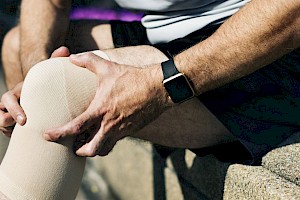
Kinesiology. It relates to movement assessment and rehabilitation from a health field. Review anatomy, physiology, and clinical practice. Further sports training builds on that foundation and on the professional scope of the qualification.
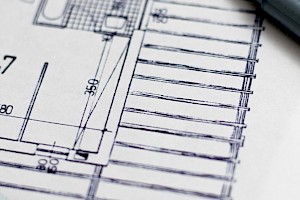
Architecture. It relates to the design of spaces and their uses. Sports facilities require understanding practices, circulation, and services. Review design studios and documentation, and compare the approach with that of engineering.
Event Organization. It relates to planning, suppliers, and operation of gatherings. Sports involve specific formats and rules. Look for internships where you have to connect timelines, participants, services, and team tasks.
Medicine. The base degree focuses on health and clinical care through scientific training and internships. A guidance in sports requires further specialization and checking the professional requirements of the place where you want to work.
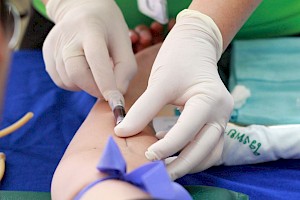
Nursing. It lets you study care and participation in healthcare. At an event, you may collaborate with other professionals within your competencies; coordinating a service or knowing first aid does not represent the same educational path.
Nutrition. It studies food and nutrition with scientific training and professional practice. Applying it to sports requires understanding individual needs and contexts. Look at how you learn to interview, assess, and support people.
Hotel Management. It relates to lodging, front desk, and service coordination. A sports delegation brings particular needs that must be understood. Compare operational and guest service work with planning the entire trip.
Logistics. It covers coordination of materials, storage, and movements. In sports projects, it connects with venues, teams, and suppliers. Compare process analysis with other management or participant support functions.
Psychology. Develops knowledge and methods to address psychological processes. Sport is a possible context for practice and specialization. Review the full degree and distinguish professional practice from motivational or leadership training.
Business Administration. Provides knowledge to organize resources, people and processes. The sports context requires understanding how the entity works. Review operations, planning and budgeting projects, as well as subjects with sector guidance.








Disciplines change the work questions
Boxing. Combat sport with physical preparation, technique, categories and safety controls.
Judo and martial arts. Combat disciplines with progressive teaching, rules and specific grading systems.
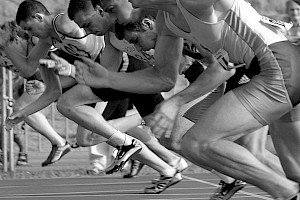
Para athletics. Adapted athletic events, with classification and regulations defined by sports organizations.
Para swimming. Aquatic competition with rules, classifications and adapted access conditions.
Wheelchair basketball. Adapted team game with sports wheelchairs, accessible facilities and specific regulations.
Basic training allows you to study a field; working with a discipline requires understanding its specific conditions. You should not assume that knowing one practice prepares you to teach, advise or intervene technically in all the others.
How to choose between these paths
Ask yourself if you are drawn to working with people, the scientific study of the body or designing supports for participation. Review the subjects and internships, and check the qualification and the conditions for practice. A sports guidance does not make healthcare and education careers interchangeable.
Clinical tasks and professional interventions require the relevant training and authorizations. An educational activity about well-being or brief training does not replace a health qualification. In shared projects it must be clear who assesses, who decides and who supports.
Check the prior studies required by each option. Initial degrees, courses, sports licenses, and postgraduate programs have different objectives and requirements. A career test can help you organize questions to compare them with study plans and practical training.
Where to start looking for institutions
If your interest is close to Kinesiology, compare the institutions that offer that degree. For the other programs, check their profiles and review the options in the country where you want to study. The same sports field can bring together programs of different levels and scopes.
 Universidad Austral de Chile (UACh)Valdivia · Private
 Universidad de Chile (UChile)Santiago · Public
 Universidad del Salvador (USal)Ciudad Autónoma de Buenos Aires · Private
 Universidad Autónoma de Aguascalientes (UAA)Aguascalientes · Public
 Universidad Nacional de La Matanza (UNLaM)San Justo · Public
 Universidad Autónoma de Chihuahua (UACH)Chihuahua · Public
 Universidad Abierta Interamericana (UAI)Ciudad Autónoma de Buenos Aires · Private
 Universidad Santo Tomás (UST)Santiago · Private
Keep comparing sports areas
You can connect these paths with the sports degrees.