
Health degrees in Colombia
Medicine, Nursing, Psychology, Veterinary Medicine, Dentistry, Physiotherapy, Nutrition and others: they are health degrees you can study in Colombia.
If you like knowing why what hurts hurts, if you help at home when someone is sick or if you keep thinking about how others think, there are undergraduate degrees that build on those interests.
How health is studied in Colombia
They are university undergraduate degrees at public and private institutions in Bogotá, Medellín, Barranquilla, Cali, Bucaramanga, Tunja or Chía, among other cities. The first subjects are usually in basic sciences, such as anatomy, biology and chemistry, and then comes hands-on practice with people, in hospitals or care centers and with supervision.
Some health careers require meeting the country's requirements to practice, such as registration in the RETHUS (Registro Único Nacional del Talento Humano en Salud). Before deciding, check what each one requires on the site of the Ministerio de Salud y Protección Social, and confirm in the SNIES that the program has qualified registration.
Health degrees in Colombia
Among those studied in Colombia are Medicine, Nursing, Psychology and Health Services Administration.




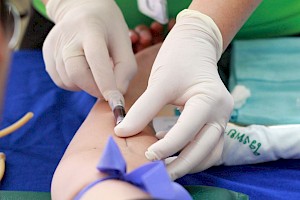




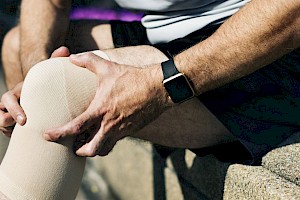


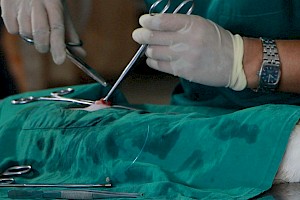
There are degrees that work face to face with patients, such as Medicine, Nursing or Kinesiology (in Colombia, Physiotherapy), and others that support the system from behind: in service management, in the operating room, such as Surgical Instrumentation, or in the laboratory, such as Biochemistry. Biochemistry and Biotechnology overlap with the science degrees in Colombia, and Forensic Psychology with those in law and security.
Where to study health in Colombia
 Universidad Antonio Nariño (UAN)Bogotá · PrivateBiochemistryNursingMedicineVeterinary MedicineDentistryPsychologyBiotechnologyHealth Services Administration
 Universidad del Rosario (UR)Bogotá · PrivateMedicineOccupational TherapyPsychologyNursingPhysiotherapyHealth Services AdministrationPlastic SurgeryPsychiatry
 Fundación Universitaria del Área Andina (FUAA)Bogotá · PrivateNursingSurgical TechnologyMedicinePhysical EducationPsychologyDentistryHealth Services Administration
 Universidad del Valle (Univalle)Santiago de Cali · PublicMedicineNursingDentistryBiochemistryPhysiotherapyPsychologyHealth Services Administration
 Universidad Metropolitana (Unimetro)Barranquilla · PrivateMedicineNursingDentistryPhysiotherapyPsychologyNutrition
 Universidad El Bosque (Unbosque)Bogotá, D.C. · PrivateMedicineDentistryNursingPsychologyHealth Services Administration
 Universidad FUCSBogotá, D.C. · PrivateMedicineNursingPhysiotherapyPsychologySurgical Technology
 Universidad Santo Tomás (USTA)Bogotá · PrivatePsychologyPhysical EducationForensic PsychologyHealth Services AdministrationDentistry
How to choose between them
Think about what you do when no one asks you to: if you are the one who calms others down, if you enjoy putting together a meal plan, if you are drawn to animals or if science experiments are your thing.
Then ask yourself what type of work you feel comfortable with. Supporting people in their recovery, as in Physiotherapy or Occupational Therapy, is different from working with samples in Biochemistry. Also think about length: some require many years of study and long practical training.
If you're torn between Dentistry and Veterinary Medicine, compare what subjects each one includes and which is offered near you. The career test gives you a second perspective.
To read before choosing



Frequently asked questions
What do they require to get into Medicine in Colombia?
Each institution defines its admission process, and many take into account the Saber 11 results, administered by the ICFES. In health degrees there are usually also interviews or their own tests.
How long do health degrees last in Colombia?
Medicine is the longest in the field; Dentistry, Veterinary Medicine, Pharmacy and Occupational Therapy follow; Nursing, Psychology and Physical Therapy are in the middle, and Nutrition or Health Services Administration take less time.
What is RETHUS and why does it matter?
It is the National Unified Registry of Health Human Talent: health careers must register in order to practice. The Ministry of Health and Social Protection explains how it works.
Do I need to be good at chemistry to study health?
It helps to have a foundation in chemistry and biology, because the first semesters build on that.
What if blood makes me queasy?
You can go for Psychology, Health Services Administration or Nutrition. Before ruling out a degree, read what you actually do in it.