
Health degrees in Spain
Medicine, Nursing, Psychology, Physiotherapy, Pharmacy, Dentistry, Nutrition, Veterinary and others: they are health degrees you can study in Spain.
If they call on you when someone feels dizzy in class, if you enjoy biology or if you like caring for others, there are degrees that build on that.
How health is studied in Spain
They are university degrees at public and private faculties in Madrid, Barcelona, Valencia, Murcia, Pamplona, Salamanca or Santiago de Compostela, among other cities. They combine science subjects with internships, which in several degrees take place in hospitals and health centers with supervision.
To get in, you take the Prueba de Acceso a la Universidad (PAU), and each university publishes its cutoff scores. To check that a degree is official, the RUCT is the registry of universities, centers and degrees; the general access framework is on the website of the Ministry of Science, Innovation and Universities.
Health degrees in Spain
Among those studied in Spain are Medicine, Nursing, Psychology, Nutrition and Dentistry, as well as Kinesiology (in Spain, Physiotherapy).


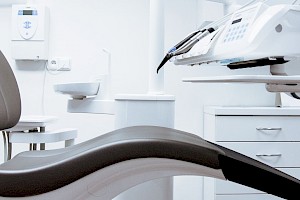

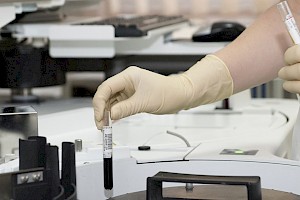


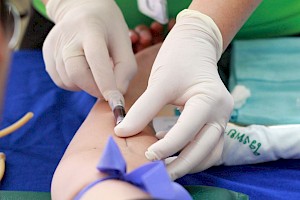



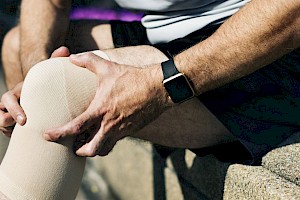

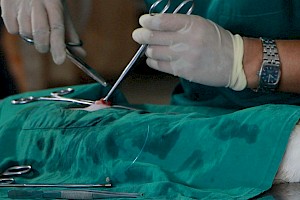
Some degrees involve direct patient care, like Medicine, Nursing or Physiotherapy; others work in laboratories, with medications or in organizing services, like Pharmacy, Biotechnology or Biochemistry. The latter overlap with the science degrees in Spain, and Physical Education with those in education.
Where to study health in Spain
 Universidad CEU San Pablo (CEU)Madrid · PrivateBiotechnologyNursingPharmacyPhysiotherapyMedicineNutritionDentistryPsychologyVeterinary MedicineGeneticsBiochemistryForensic Psychology
 Universidad Camilo José Cela (UCJC)Madrid · PrivatePhysical EducationNursingPhysiotherapyPsychologyMedicineDentistryPharmacyNutritionBiochemistry
 Universidad CEU Cardenal Herrera (CEU)Alfara del Patriarca · PrivateNursingPharmacyPhysiotherapyMedicineNutritionDentistryPsychologyVeterinary MedicinePhysical Education
 Universidad Antonio de Nebrija (UANE)Madrid · PrivateNursingPhysiotherapyPsychologyPhysical EducationNutritionMedicineDentistry
 Universidad de Salamanca (USAL)Salamanca · PublicMedicineDentistryPsychologyPharmacyNursingPhysiotherapyBiotechnology
 Universidad de Santiago de Compostela (USC)Santiago de Compostela · PublicMedicineDentistryNursingPharmacyPsychologyBiotechnologyVeterinary Medicine
 Universidad de Alcalá (UAH)Alcalá de Henares · PublicMedicineNursingPsychologyPharmacyPhysical EducationHealth Services Administration
 Universidad de Barcelona (UBA)Barcelona · PublicMedicinePsychologyNursingPharmacyBiotechnologyDentistry
How to choose between them
Think about what you do without being asked: if you are the one who knows what to do when someone gets hurt playing, if you look at food labels, if you like animals or if your thing is the science lab.
Then decide what work you feel comfortable with: dealing with people all day, like in Nursing or Dentistry, or spending more time with samples and tests, like in Biochemistry or Biotechnology.
If you are torn between Pharmacy and Biotechnology, compare the subjects in each degree and see which universities near you offer them. The career test can help you break the tie.
To read before choosing


Frequently asked questions
What does it take to get into a health degree?
The Bachillerato and the PAU (formerly EBAU). Each university sets the cutoff score for each degree, which changes every year; compare it on its website.
How long do health degrees last in Spain?
Medicine is the longest; Dentistry, Pharmacy and Veterinary Medicine take a little less, and Nursing, Physiotherapy, Psychology or Nutrition have the usual length of a degree. Afterwards, some careers continue with a specialization.
How do I know if a university degree is officially recognized?
Look it up in the RUCT, the Registry of Universities, Centers and Degrees.
Can I work in healthcare without being a doctor?
Yes. In Spain, Nursing, Pharmacy, Psychology, Physiotherapy, Nutrition and Veterinary Medicine, among others, are studied separately.
What subjects should I be strong in?
Biology and chemistry, because the first years of Medicine, Pharmacy or Nursing build on that.
What is the difference between Physiotherapy and Nursing?
Physiotherapy rehabilitates injuries and ailments of the body through movement; Nursing is concerned with the complete care of the patient, physically, psychologically and socially, and works very closely with the rest of the healthcare team.