
Science degrees in Argentina
Biological Sciences, Physics, Chemistry, Mathematics, Geology, Biochemistry, Paleontology, Astronomy and others: they are science degrees you can study in Argentina.
If in biology or physics class you wanted to keep researching when the bell rang, or if math problems hook you, there are bachelor's degrees that follow that curiosity.
How sciences are studied in Argentina
They are university degrees, at public and private universities in Ciudad de Buenos Aires and Córdoba and also in La Plata, Bahía Blanca, Mar del Plata, Tandil or Luján. There is usually an initial stage of basic subjects, with a lot of math, which serves as a basis for the specific ones: it's best to attend classes regularly and not let topics pile up.
Some are more experimental and others more theoretical, and several overlap with engineering, health or technology. For undergraduate degrees, CONEAU is the body that evaluates and accredits their quality.
Science degrees in Argentina
In addition to the classic ones, in Argentina you can study Biotechnology, Forensic Science, Food Science and Technology and Astronomy.

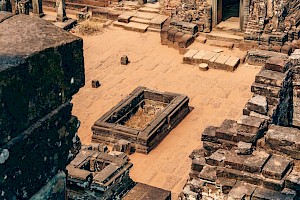
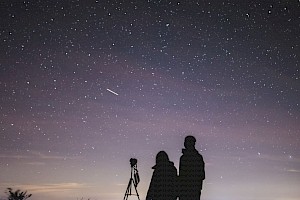

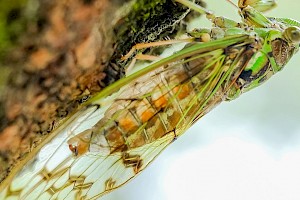






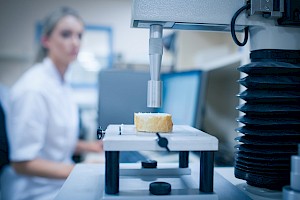

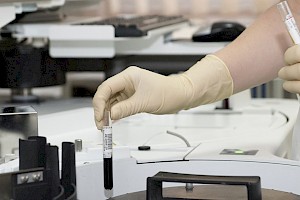







Biological Sciences, Biochemistry, Biotechnology and Genetics study life; Physics, Chemistry and Astronomy, matter and the universe; Geology, Paleontology and Geography, the Earth and its past; Mathematics, Statistics and Data Science, numbers. Several overlap with health degrees in Argentina and with engineering ones.
Where to study science in Argentina
 Universidad Nacional de La Plata (UNLP)La Plata · PublicGeologyAstronomyPhysicsBiochemistryBiotechnologyFood Science and TechnologyMathematicsChemistryBiological SciencesGeographyChemical Engineering
 Universidad Nacional del Sur (UNS)Bahía Blanca · PublicBiochemistryBiological SciencesPhysicsGeographyGeologyEnvironmental SciencesChemical EngineeringMathematicsChemistry
 Universidad Nacional de Mar del Plata (UNMdP)Mar del Plata · PublicFood Science and TechnologyBiochemistryBiological SciencesMathematicsPhysicsChemistryGeographyChemical Engineering
 Universidad Nacional del Centro de la Provincia de Buenos Aires (UNCPBA)Tandil · PublicFood Science and TechnologyBiological SciencesEnvironmental SciencesPhysicsMathematicsGeographyChemical Engineering
 Universidad Nacional de General Sarmiento (UNGS)Los Polvorines · PublicMathematicsChemistryChemical EngineeringEnvironmental SciencesGeographyPhysics
 Universidad CAECE (CAECE)Ciudad Autónoma de Buenos Aires · PrivateEnvironmental SciencesMathematicsNanotechnologyData ScienceBiological Sciences
 Universidad Nacional de Luján (UNLu)Luján · PublicEnvironmental SciencesGeographyBiological SciencesFood Science and TechnologyPhysics
 Universidad de Buenos Aires (UBA)Ciudad Autónoma de Buenos Aires · PublicActuaryEnvironmental SciencesComputer ScienceBiochemistry
How to choose between them
Think about what you do for fun: if you look for explanations for strange phenomena, if you like cooking and understanding what happens to ingredients, if you write down your tournament results in a table.
Then decide which world calls to you most: living things, matter, the planet or numbers. If environment and territory attract you, compare Geology with Environmental Sciences; if you like logic and data, look at Mathematics and Data Science.
If you're torn between Physics and Mathematics, open both profiles, compare what subjects they include and ask at the faculty if there are talks or open classes for those finishing high school. The career test can help you decide which to try first.
To read before choosing



Frequently asked questions
How long do science degrees take in Argentina?
Biochemistry, Geology, Chemical Engineering, Archaeology and Astronomy are among the longest; Criminalistics and Nanotechnology are among the shortest; Physics, Mathematics or Biological Sciences fall in the middle.
Are there science degrees without math?
Almost all include some math course, and how much weight it carries depends on the degree: in Mathematics and Physics it is at the center of the curriculum, and in others it is just another tool.
How do I know if a science bachelor's degree is accredited?
Check the CONEAU site and ask the university about the status of the program.
What does an Actuary do?
They combine mathematics and statistics with risk analysis: they calculate how likely something is to happen and how much it would cost. Read the Actuary profile.
Will I spend a lot of time in a laboratory?
In Chemistry, Biochemistry or Biotechnology, yes; in Mathematics or Data Science the work is more calculation-based, and in Geology or Paleontology there are field trips.