
Agro and environment degrees in Argentina
Agronomy, veterinary science, environmental sciences, enology, forestry engineering, water resources and rural administration: they are agro and environment degrees you can study in Argentina.
If you are interested in where what you eat comes from, you like animals or you want to understand how to take care of water and soil, that's where you can start looking.
How agro and environment are studied in Argentina
They are offered mainly by universities, public and private, and not only in the big cities: in addition to Buenos Aires, Rosario or La Plata, there are schools in places like Tandil, Bahía Blanca, Santa Rosa or Concepción del Uruguay, closer to the countryside where the practical training takes place.
Some focus on production, like Rural Administration, which looks at managing an agricultural business; others on measuring and reducing people's impact, like Environmental Sciences. Several undergraduate degrees in the field, like Veterinary Science, go through accreditation by the CONEAU, the national commission that evaluates university degrees.
The agro and environment degrees in Argentina
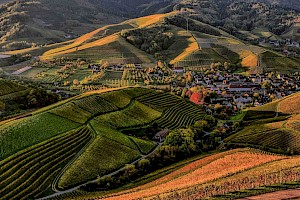
Among those studied in Argentina are Agronomy, Veterinary Science and Enology, the latter closely linked to vineyard areas.






Agronomy and Rural Administration look at production; Environmental Sciences, Environmental Engineering and Water Resources, at caring for water and soil; Veterinary Science, at animal health, and Forestry Engineering, at forests. Several share courses with the engineering degrees in Argentina, and Enology overlaps with those in tourism and gastronomy.
Where to study agro and environment in Argentina
 Universidad Nacional del Centro de la Provincia de Buenos Aires (UNCPBA)Tandil · PublicAgronomyRural AdministrationEnvironmental SciencesEnvironmental EngineeringVeterinary Medicine
 Universidad del Salvador (USal)Ciudad Autónoma de Buenos Aires · PrivateEnvironmental SciencesAgronomyForestry EngineeringVeterinary Medicine
 Universidad de Buenos Aires (UBA)Ciudad Autónoma de Buenos Aires · PublicAgronomyEnvironmental SciencesVeterinary Medicine
 Universidad Nacional de Cuyo (UNCUYO)PublicAgronomyEnvironmental EngineeringWinemaking
 Universidad Nacional de La Pampa (UNLPam)Santa Rosa · PublicVeterinary MedicineAgronomyWater Resources
 Universidad Nacional de La Plata (UNLP)La Plata · PublicAgronomyForestry EngineeringVeterinary Medicine
 Universidad Nacional de los Comechingones (UNLC)Villa de Merlo · PublicEnvironmental EngineeringWater ResourcesEnvironmental Sciences
 Universidad Nacional de San Antonio de Areco (UNSAdA)San Antonio de Areco · PublicVeterinary MedicineAgronomyEnvironmental Sciences
How to choose between them
Think about what you do when you have free time: if you like cooking and understanding how a food is made, if you take care of your pet or a neighbor's, if you get upset when you see litter on the ground, if you prefer going out for a walk rather than staying home.
Then define how you see yourself working: in the countryside, in a laboratory, in an office organizing teams or traveling around areas to measure and propose changes. Managing production is not the same as studying the impact of that production.
If you're torn between Agronomy and Environmental Engineering, compare the subjects in each profile and check which schools you have nearby: many are in inland cities, and moving may be part of the decision. The career test gives you another clue about which one suits you.
To read before choosing


Frequently asked questions
What is the difference between Agronomy and Rural Administration?
Both are related to food production. Agronomy focuses on improving what is produced and how it is produced; Rural Administration, on organizing and managing the business that produces it. Compare the curricula instead of just going by the title.
How do I know if a degree is accredited in Argentina?
Check with CONEAU or with the university itself. Not all degrees go through the same evaluation, so ask which one applies to the one you choose.
Which high school subjects will help me?
Biology, chemistry, and math come up especially at the start. If any of them is hard for you, check if the university offers an introductory or support course.
How long do these degrees take in Argentina?
Agronomy, Veterinary Medicine, Forestry Engineering, and Rural Administration are among the longest; Environmental Sciences, Enology, and Water Resources are among the shortest, with Environmental Engineering in the middle.
What does someone who studies Sustainable Alternatives Development do?
They carry out environmental impact studies, in cities and in natural areas, and design plans to make better use of energy and resources in industries. Read its profile and compare it with Environmental Sciences.