
Degrees without math
There are degrees where math is not the main focus: what you do most is read, write, create, speak, design, cook or work with people. If numbers aren't your thing, these are options where you won't be solving equations all the time.
Now, "without math" doesn't mean "without numbers": almost all degrees include some of it, for example statistics in some social sciences, costs in gastronomy and hospitality, or measurements in design. It's a small part and it's in support of something else, but it's there. Before choosing, look at the subjects in the program you're interested in.
What these degrees have in common
They rely on reading, writing, creativity, expression, or dealing with other people. They are assessed with assignments, projects, presentations, texts and hands-on practice more than with calculus problems.
They are also degrees that are very different from each other: some take you to a workshop, a set or a kitchen, others to a library, a classroom or a courtroom. What they share is that mathematical reasoning is not what defines them.
Each institution puts together its curriculum in its own way. The same degree may include a statistics or accounting subject in one place and not in another, so it's worth reading the list of subjects before enrolling. If you like numbers instead, check out the degrees with math.
The degrees without math
Art and entertainment
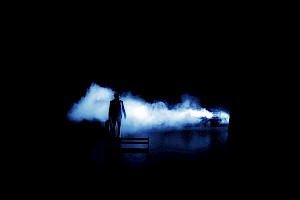
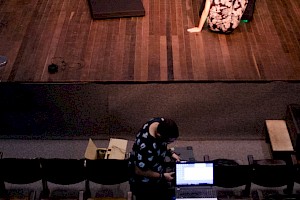
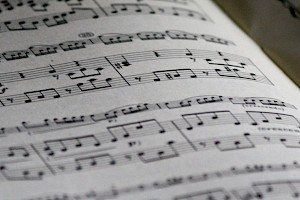
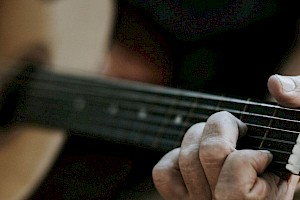
For those who create on a stage, with an instrument, with a camera or with a pencil, and for those who put together what happens behind the scenes: Acting, Dance, Music, Photography, film, animation and cultural management.
















Design
Thinking about how things look and how they are used: garments, spaces, graphic pieces, jewelry, books. You work with drawing, materials and software, and depending on the institution there may be some measurements or costs, without that being the focus.










Communication
Telling stories, explaining and getting messages across: writing, speaking, recording, publishing, organizing a campaign. For anyone who enjoys social media, radio, writing or conversation.












Social sciences and humanities
Understanding people, history, ideas and how a society is organized. It involves a lot of reading, writing and discussion. Some, like Political Science or Anthropology, may include statistics as a tool, but the focus is on people and ideas.











Education
Helping others learn, from childhood to artistic or sports training.







Law and security
Rules, justice, security and behavior analysis. There is a lot of reading, argumentation and case analysis.





Tourism, gastronomy and beauty
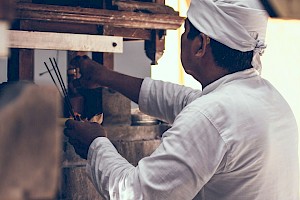
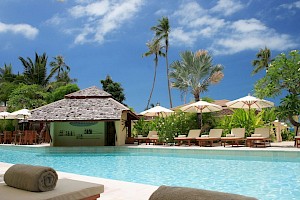
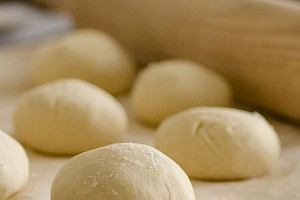
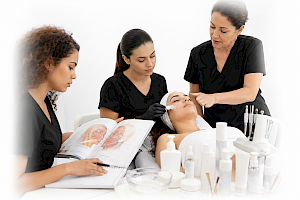
Service and trade work: cooking, welcoming people, organizing trips and events, taking care of image and well-being. In some, like Gastronomy or Hospitality, there may be cost and quantity calculations, but practice matters more.






Where to study these degrees
Universities, institutes and specialized schools offer them, and the degree title and length change depending on the institution and the country.
 Universidad del Salvador (USal)Ciudad Autónoma de Buenos Aires · Private
 Universidad Autónoma de Aguascalientes (UAA)Aguascalientes · Public
 Universidad Autónoma de Baja California (UABC)Mexicali · Public
 Universidad Nacional de La Plata (UNLP)La Plata · Public
 Universidad de Chile (UChile)Santiago · Public
 Universidad de Palermo (UP)Ciudad Autónoma de Buenos Aires · Private
 Universidad de Bogotá Jorge Tadeo Lozano (UTadeo)Bogotá · Private
 Universidad CEU San Pablo (CEU)Madrid · Private
How to choose between them
Think about what you do when no one asks you to: if you write, if you edit videos, if you draw, if you cook for your friends, if you help others with homework or if you are interested in discussions about how society works. That clue is usually more helpful than the name of the degree.
If you are torn between two, compare the subjects in each program and look at how many involve numbers. The career test shows you which degrees your answers fit best.
To read before choosing



Frequently asked questions
Are there degrees with zero math?
Almost none. Usually there is some statistics, costs or measurements, but without being the focus of the degree. Check the subjects in each program.
Do I need to know math to get in?
It depends on the institution and the country. Some require an entrance exam that includes math, others do not. Confirm it in the program requirements.
Is a degree without math easier?
Not necessarily. It has other demands: a lot of reading, writing, practice or creative work, depending on the degree.
What number-related subjects might come up?
Depending on the institution, there may be statistics in some social science or communication degrees, costs and budgets in gastronomy, hospitality or events, or measurements and proportions in design.
How do I know how much math a program has?
Look at the curriculum: the list of subjects for each institution shows you whether there is statistics, accounting or calculus.