
Agro and environment degrees in Spain
Veterinary Science, agronomy, environmental sciences, environmental engineering, forestry engineering and oenology: these are agro and environment degrees you can study in Spain.
If you like animals, the countryside, the wine or olive oil from your land, or the idea of protecting a river, this area is for you.
How to study agro and environment in Spain
They are university degrees, at public and private universities, spread across the country: Madrid, Zaragoza, León, Santiago de Compostela, Cartagena, the Barcelona area or Almería, among other cities. The name of the degree and its content vary from one university to another.
Some focus on production, like Agronomy or Oenology, which looks at wine from the vineyard to the bottle; others on conserving and managing the environment, like Environmental Sciences. To check that a qualification is official, consult the Registry of Universities, Centers and Degrees (RUCT).
The agro and environment degrees in Spain
Those studied in Spain include Veterinary Science, Agronomy and Forestry Engineering.
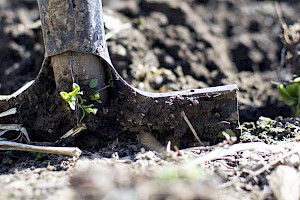


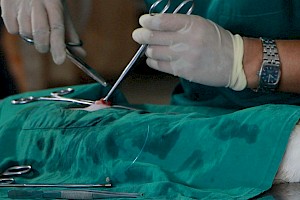

Veterinary Science deals with animal health; Agronomy and Oenology, with producing food and wine; Forestry Engineering, Environmental Engineering and Environmental Sciences, with managing and protecting the environment. The engineering degrees in the area have a lot in common with the engineering degrees in Spain, and Oenology with those in tourism and gastronomy.
Where to study agro and environment in Spain
 Universidad Politécnica de Madrid (UPM)Madrid · PublicAgronomyEnvironmental EngineeringForestry Engineering
 Universidad Autónoma de Barcelona (UAB)Cerdanyola del Vallès · PublicVeterinary Medicine
 Universidad CEU Cardenal Herrera (CEU)Alfara del Patriarca · PrivateVeterinary Medicine
 Universidad CEU San Pablo (CEU)Madrid · PrivateVeterinary Medicine
 Universidad de A Coruña (UDC)A Coruña · PublicVeterinary Medicine
 Universidad de Almería (UAL)La Cañada de San Urbano · PublicAgronomy
 Universidad de Extremadura (UEX)Badajoz · PublicVeterinary Medicine
 Universidad de Huelva (UHU)Huelva · PublicEnvironmental Sciences
How to choose between them
Think about what you do for fun: whether you go out into the countryside with your friends, whether you look after animals, whether you are interested in how the wine or olive oil in your region is made, whether it bothers you to see a river full of litter.
Then ask yourself if you see yourself outdoors, in a laboratory or in an office managing projects, and whether you prefer living things, like plants and animals, or the environment around them.
If you are torn between Oenology and Environmental Sciences, compare the subjects in each profile: one revolves around wine and the other around the environment. Also look at how much weight fieldwork carries in each curriculum. The career test gives you a second opinion.
To read before choosing


Frequently asked questions
What grade do I need to get into Veterinary Science?
It depends on the university and the year: each degree has its own cutoff grade, which is calculated using the Bachillerato and the University Entrance Exam (PAU). The list of available places is on the website of the Ministry of Science, Innovation and Universities, and each university publishes its own grades.
How do I check that an agriculture degree is official?
Look it up by university in the RUCT: if the qualification does not appear there, it is not an official degree.
Do I need to live in the countryside to study these degrees?
No. But in several of them there are placements on farms, in laboratories or in natural areas, and some campuses are outside the big cities. Check where it is taught.
Which school subjects will help me?
Biology, chemistry, physics and mathematics provide a foundation in the first years. Look at the syllabus of each degree to see which science subjects there are at the start.
How long do these degrees last in Spain?
Almost all the degrees in the area have a similar duration; Veterinary Science is the longest.