
Agriculture and environment degrees in Mexico
Agronomy, veterinary science, environmental science and engineering, forestry engineering, enology, and others: these are agriculture and environment degrees that you can study in Mexico.
If you take care of the houseplants, approach any dog you see, or care about what happens to the water in your city, you already have a place to start.
How agriculture and environment are studied in Mexico
It is an area with programs in almost every part of the country, not only in the capitals: there are programs from Tijuana, Mexicali, or Hermosillo to Xalapa, Chetumal, or San Cristóbal de las Casas, and also in small municipalities near the farming and forest areas. That can allow you to study without going far away.
Some degrees focus on producing better, like Agronomy; others on caring for and recovering what already exists, like Environmental Sciences. If you choose a private institution, ask whether the program has the official recognition of validity of studies (RVOE), which is granted by the Secretaría de Educación Pública or by the educational authority of each state.
Agriculture and environment degrees in Mexico
Among those studied in Mexico are Agronomy, Environmental Engineering, and Forestry Engineering, in addition to options such as Enology or Water Resources.
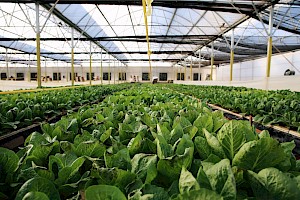
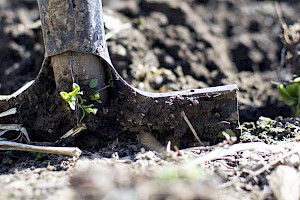


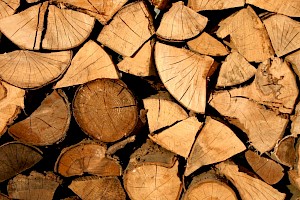
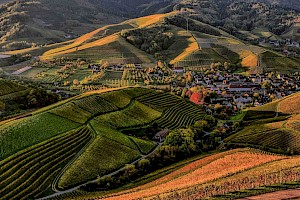
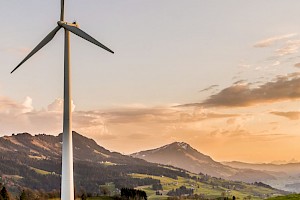



Agronomy and Agricultural Engineering look at how to produce better; Rural Administration, at how to manage the company that produces; Forestry Engineering, Water Resources, and the environmental degrees, at how to conserve forests, water, and soil. If you are interested in the technical side, compare them with the engineering degrees in Mexico; if you are interested in research, compare them with the science degrees.
Where to study agriculture and environment in Mexico
 Universidad Autónoma de Baja California (UABC)Mexicali · PublicVeterinary MedicineAgricultural EngineeringAgronomyEnvironmental SciencesWinemaking
 Universidad Autónoma de Baja California Sur (UABCS)La Paz · PublicAgronomyVeterinary MedicineWater ResourcesEnvironmental Sciences
 Universidad Autónoma de Chapingo (UACh)Texcoco · PublicAgronomyWater ResourcesForestry EngineeringVeterinary Medicine
 Universidad Autónoma de Chiapas (UNACH)Tuxtla Gutiérrez · PublicRural AdministrationAgronomyForestry EngineeringVeterinary Medicine
 Universidad Autónoma de Chihuahua (UACH)Chihuahua · PublicAgronomyForestry EngineeringRural AdministrationVeterinary Medicine
 El Colegio de la Frontera Norte (COLEF)Tijuana · PublicVeterinary MedicineAgronomyEnvironmental Engineering
 Universidad Autónoma Agraria Antonio Narro (UAAAN)Saltillo · PublicAgronomyForestry EngineeringVeterinary Medicine
 Universidad Autónoma de Aguascalientes (UAA)Aguascalientes · PublicAgronomyVeterinary MedicineEnvironmental Sciences
How to choose among them
Look at what you do without anyone asking you to: if you like the cornfield or your family's garden, if you offer to take care of the animals, if the garbage in the park bothers you, if you prefer spending the afternoon outside rather than in front of a screen.
Then ask yourself where you imagine yourself working: in the field, in a laboratory, or planning. Environmental Engineering can lead you to measure the quality of a river, and Veterinary Science to practices with animals of different sizes; think about whether you see yourself doing that regularly.
If you're torn between Agronomy and Environmental Engineering, compare the subjects in their profile: one focuses on how to produce better and the other on how to reduce harm to the environment. The career test helps you see which one you're leaning toward.
Things to read before choosing


Frequently asked questions
Is there an admission exam for Agronomy?
It depends on the institution. Some require their own exam and others use external tests, like the EXANI-II administered by Ceneval. Check each program's call for applications.
How do I know if a private university is officially recognized?
Ask the institution for the program's RVOE number and verify it with the SEP or with the state education authority that granted it.
Do I have to be from the countryside to study agronomy?
No. Still, you'll spend time in fields, farms, or natural areas for hands-on practice, and several campuses are in rural municipalities.
What's the difference between Environmental Sciences and Environmental Engineering?
Both aim to solve problems people cause in nature. Environmental Sciences focuses more on studying the environment, and Environmental Engineering on applying engineering techniques; compare the study plans.
How long do these degrees take in Mexico?
Agronomy, Veterinary Medicine, and Forestry Engineering are among the longest; Environmental Engineering and Agricultural Engineering, in the middle; Environmental Sciences, Enology, and Water Resources, among the shortest.